

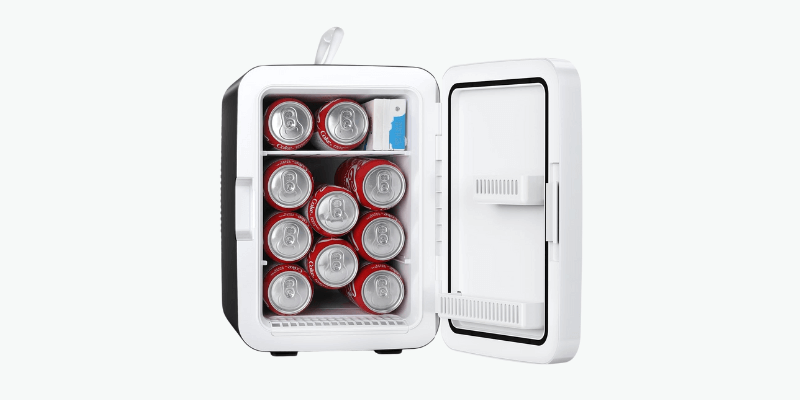
A mini fridge keeps drinks cold and food fresh, but how much electricity does it use? Knowing its wattage helps manage energy costs, especially for those using solar power or living in small spaces like dorms or RVs. This article explains mini fridge wattage, how to calculate energy costs, tips to save energy, and ways to power it with solar panels.
How Many Watts Does a Mini Fridge Use per Day?
Watts measure the rate at which a device uses electricity. For a mini fridge, the wattage tells you how much power it needs to run. The wattage of a mini fridge depends on its size, age, and features.
Most mini fridges use between 50 and 100 watts of power when they are running. The starting wattage, which is the power needed to turn on the compressor, is higher. It can be between 200 and 400 watts. Newer, energy-efficient models might use even less, sometimes averaging around 28.5 watts.
A mini fridge does not run all the time. It cycles on and off to keep the inside temperature stable. On average, it runs for about 8 hours a day . To find out how many watts it uses per day, you need to do a small calculation.
For example, a 90-watt mini fridge that runs 8 hours a day uses:
90 watts × 8 hours = 720 watt-hours per day, or 0.72 kWh per day.

Calculating the Energy Cost of Running a Mini Fridge
Getting how much energy a mini fridge uses helps estimate its monthly cost. You can easily find out by following the below three steps.
Step 1: Find Your Mini Fridge’s Wattage
To find out how many watts a mini fridge uses, check the sticker inside the fridge or consult the manual. For example, your fridge might use 90 watts.
Step 2: Daily and Monthly Use Calculation
Next, calculate the daily energy consumption in kilowatt-hours (kWh). The formula is:
(Wattage × Hours used per day) ÷ 1000 .
For our 90-watt fridge running 8 hours a day:
(90 watts × 8 hours) ÷ 1000 = 0.72 kWh per day.
To get the monthly use, multiply the daily use by 30 days.
0.72 kWh/day × 30 days = 21.6 kWh per month.
Step 3: Cost Estimate
Finally, multiply your monthly kWh by your local electricity rate.
Monthly Cost = Monthly kWh × Cost per kWh.
For example, at $0.13/kWh and 21.6 kWh used, the monthly charge is $2.81.
Electricity rates vary by state; California’s high rate of $0.24/kWh means a mini fridge costs about $5.18 per month, while Louisiana’s lower rate of $0.09/kWh results in a cost of $1.94 per month.
How to Save Energy with Your Mini Fridge?
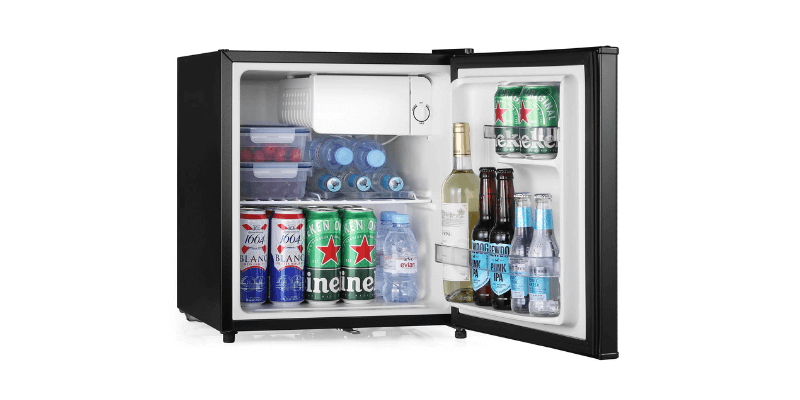
While mini fridges are fairly efficient, there is room for improvement. Here are five simple tips to save energy while keeping your fridge functional.
Fill It Up, But Don’t Cramp It
A fuller fridge retains cold air better, so the compressor works less. However, avoid overstuffing, as blocking air vents reduces efficiency.
Place It in a Cool Area
A mini fridge in a hot area uses more power to maintain its temperature. Place it in a cool, dry spot away from sunlight and heat sources like ovens, radiators, or vents.
Inspect the Door for Gaps
If the door seals on the refrigerator are loose, warm air can enter. Though uncommon, always inspect the seals around the door and frame of your mini-fridge.
Set it to a Slightly Higher Setting
The colder the setting, the more energy the fridge uses. A temperature of 37°F to 40°F (3°C to 4°C) is cold enough for food safety and helps save energy.
Regular maintenance
To keep your fridge efficient, defrost regularly if it’s not frost-free to prevent ice buildup. Vacuum condenser coils every 6–12 months to save energy. Clean the interior to prevent mold and odors that strain the appliance.

How Mini Fridge Wattage Impacts Solar System Sizing
If you plan to power a mini fridge with solar panels, you need to know its wattage to size your solar system correctly.
Key Considerations
- Mini Fridge Wattage: Typically 50-100 watts for the fridge itself.
- Daily Energy Consumption: For a 90-watt fridge running 8 hours, it’s about 0.72 kWh per day.
- Starting Wattage: Remember the compressor needs a surge of power to start. Your system must handle this spike, which can be 2-3 times the running wattage.
- Sunlight Hours: This determines how much energy your solar panels can generate.
Calculations
- Battery Capacity: To power the fridge when the sun isn’t shining, you’ll need a battery. Storing 0. 72 kWh requires a 12V lithium battery with about 60 Ah capacity, though it’s best to have a higher capacity.
- Solar Panel Size: For recharging the battery, you need enough solar panels. A common recommendation is to use one or two 100-watt solar panels.
Recommendations
- Inverter Sizing: Choose an inverter with a rating higher than the fridge’s starting wattage. A 300-watt inverter is a good choice for a 100-watt fridge .
- Battery Type: Lithium-ion batteries are recommended for their efficiency and longer lifespan.
- Account for Losses: Real-world systems have power losses. It is smart to design a system that is 10-20% larger than your calculated needs.
Conclusion
In summary, energy-conscious consumers and those considering off-grid options like solar power should know their mini fridge’s wattage.
Mini-fridges are energy-efficient, but knowing their exact wattage helps you avoid wasted energy, extra costs, and environmental harm.
Calculating daily and monthly costs, whether in a dorm, garage, or off-grid location, enables better budgeting and efficient energy use.
To reduce energy consumption, keep the mini fridge in a shaded area, avoid overpacking it, and close the doors tightly.
Those considering solar energy should note their fridge’s wattage, as it’s crucial for designing an effective setup.
FAQs
How much will a mini fridge raise my electric bill?
The cost is low. An average mini fridge adds about $2–$5 per month, depending on its efficiency and your local electricity rate.
What size solar generator do I need to run a mini fridge?
A solar generator with a capacity of at least 500 watts is a good choice. It can handle the running wattage and the starting surge of most mini fridges.
How many solar panels does it take to run a mini fridge?
Usually, one or two 100-watt solar panels are enough. This assumes you get about 5-6 hours of strong sunlight per day to recharge the battery.