

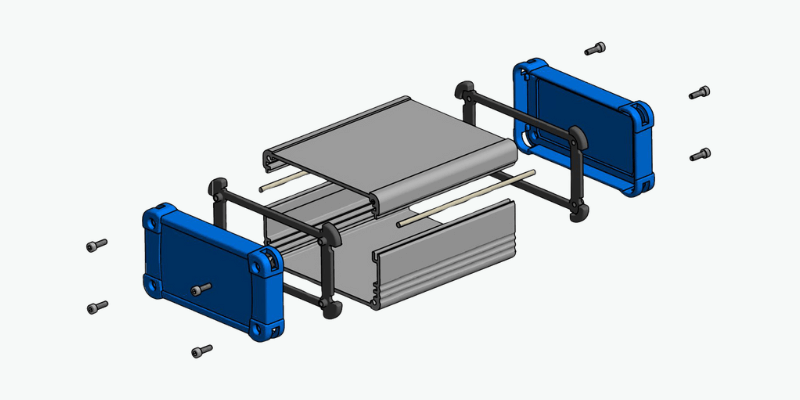
Curious about how your phone withstands splashes or how your smartwatch performs during workouts? It’s all about the IP rating.
Today, we will explain IP ratings and provide tips for achieving these standards in your designs.
What Is IP Ratings?
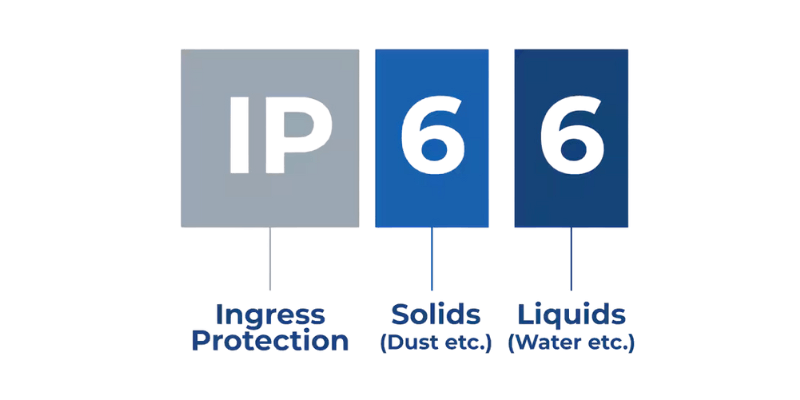
IP ratings indicate how technology protects devices from dust and water.
The Ingress Protection (IP) rating system, defined by the International Electrotechnical Commission (IEC), measures the sealing effectiveness of electrical enclosures.
It consists of two digits following “IP.” The first digit (0-6) shows protection against solid particles, with 0 meaning no protection and 6 being dust-tight. The second digit (0-9) measures liquid defense, from 0 for no protection to 9 for resistance to high-pressure water jets.
Understanding IP ratings involves knowing the differences between levels of protection; for instance, an IP67 rating means complete dust-tightness and temporary immersion in water, while an IP54 rating offers limited dust resistance and splash protection.
Everyday devices like phones often have unadvertised IP ratings; the iPhone 15 has an IP68 rating for submersion up to six meters for thirty minutes while remaining dust-tight. Companies may use terms like “water-resistant” instead of directly stating their actual IP ratings.
What Is IPX Ratings?
An IPX rating measures a device’s water resistance, with “X” indicating no protection against solid particles.
The following number ranges from IPX1 (dripping water) to IPX8 (continuous immersion). For example, an IPX4 rating protects against splashes from any direction, while an IPX7 rating allows temporary submersion up to 1 meter for 30 minutes.
Designing with IP Rating
If you’re designing a product that needs to meet IP standards, ensure you consider and safeguard every possible entry point.
Identifying Leak Areas
Seal all possible entry points for dust and water, including seams, joints, and openings for buttons or ports. Each opening should use a gasket or appropriate IP-rated component.
Nếu bạn nhận thấy rò rỉ ở các đường nối hoặc khớp nối, hãy đánh giá xem liệu đó có phải là do lỗi sản xuất, vết nứt do lực tác động hoặc mòn theo thời gian hay không. Để ngăn chặn những vấn đề này, hãy chọn vật liệu bền và độ dày phù hợp trong giai đoạn thiết kế.
Sử dụng miếng đệm để xếp hạng IP
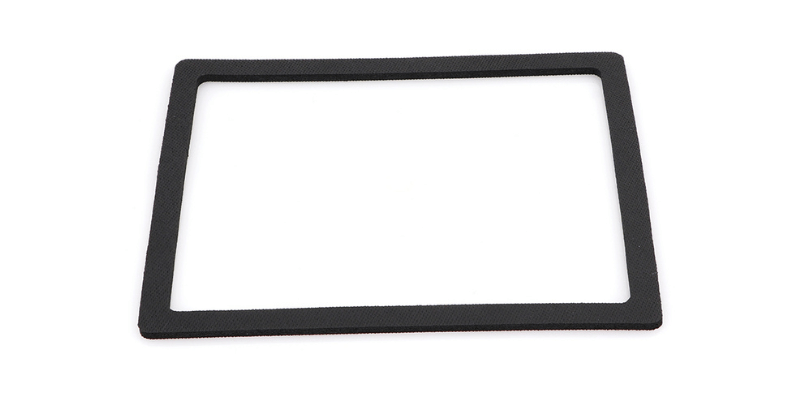
Vòng đệm rất quan trọng để bịt kín vỏ để đáp ứng xếp hạng IP.
Được làm từ cao su, silicone hoặc bọt, chúng mang lại sự linh hoạt và khả năng phục hồi cần thiết. Chúng nên được đặt giữa hai bộ phận nối bất kỳ để đảm bảo bịt kín hoàn toàn khỏi nước. Ngoài ra, chúng phải được đặt đúng vị trí với đủ lực trong quá trình lắp ráp.
Vòng đệm có nhiều hình dạng và kích cỡ khác nhau, phù hợp với các ứng dụng cụ thể. Chọn vật liệu dựa trên biến dạng yêu cầu và các lực liên quan.
Choosing IP-Rated Components & Connectors
All components must comply with the desired IP rating; pre-rated options simplify design while ensuring overall protection. Higher-rated components may incur additional costs due to enhanced watertight or dust-tight features.
Ensure correct hole dimensions, including diameter and chamfer, as specified in manufacturer data sheets for proper installation. Poorly sized holes can cause leakage if gaskets are not adequately seated against mating walls.
Phần kết luận
Ensuring your product can withstand its environment is important. Understanding IP ratings enhances durability and reassures customers about dust and water protection.
Whether you’re developing smartphones, outdoor lights, or wearables, these tips are essential for creating robust products.
Bằng cách áp dụng nguyên tắc xếp hạng IP, các nhà thiết kế có thể tạo ra thiết bị đáng tin cậy hoạt động tốt trong mọi môi trường. Hãy nhớ rằng, xếp hạng IP không chỉ là một con số!