

A custom lithium battery pack costs 40-60% more than off-the-shelf batteries. But it delivers exactly what your application needs: the right voltage, capacity, discharge rate, physical dimensions, environmental protection, and compliance certifications.
For OEMs building AGVs, medical devices, marine equipment, industrial robots, or specialty vehicles, the decision to go custom happens when no standard battery fits. Either the electrical requirements don’t match, the mechanical constraints are too tight, or the required certifications aren’t available off-the-shelf.
This guide covers the seven-phase engineering process from specification to production. You’ll learn the technical decisions that determine cost and performance, and how to work with a battery manufacturer to get reliable packs delivered on a timeline that fits your project: 8-12 weeks if you’re starting from initial requirements, or as fast as 4 weeks if your design is already finalized and doesn’t require new enclosure tooling or a custom BMS.
Real example: A marine equipment manufacturer needed 72V 100Ah with IP68 waterproofing and ABYC E-13 certification for an electric outboard motor. No standard pack existed.
Custom pack delivered: 72V 108Ah (6% over-spec for voltage sag margin), I
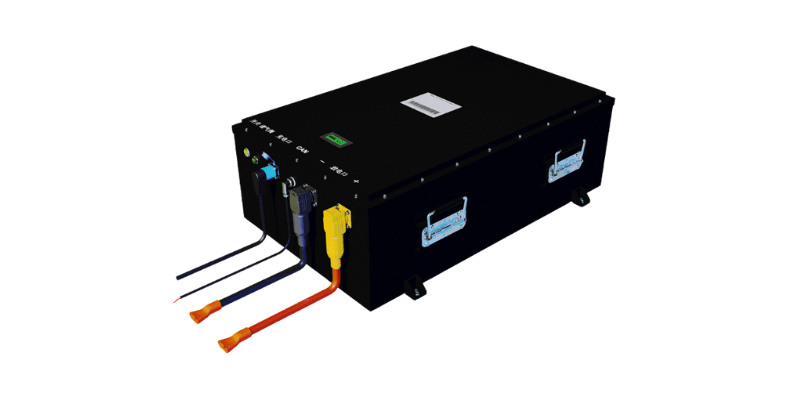
Quick decision guide: do you need a custom battery pack?
The quick version is below. For the full cost math, the schedule realities, and a middle-path option most comparisons miss, see our OEM and private-label battery pack development guide.
Choose custom if:
- Your required voltage isn’t standard (e.g., 53.2V, 80V, 96V)
- Physical dimensions are locked (must fit existing mounting space)
- You need IP67/IP68 waterproofing with specific connector types
- Your application requires industry-specific certifications (ABYC, UL 2271, IEC 62619)
- Discharge rates exceed 2C continuous for large-format prismatic cells (cylindrical cells often handle higher C-rates natively), or you have high transient peaks
- Operating temperature is outside standard range (below -10°C or above 50°C)
- You need communication protocols (CAN, RS485) or remote monitoring
- Volume justifies tooling cost (typically 200+ units annually)
Use off-the-shelf if:
- Standard voltage works (12V, 24V, 36V, 48V)
- You can adapt your mechanical design to fit standard pack dimensions
- You don’t need specialized environmental protection
- Standard certifications (UN38.3, CE) are sufficient
- Volume is under 100 units annually
Typical cost difference: Standard 48V 100Ah pack: $800-$1,200. Custom 48V 100Ah with IP67 rating and CAN communication: $1,400-$2,000.
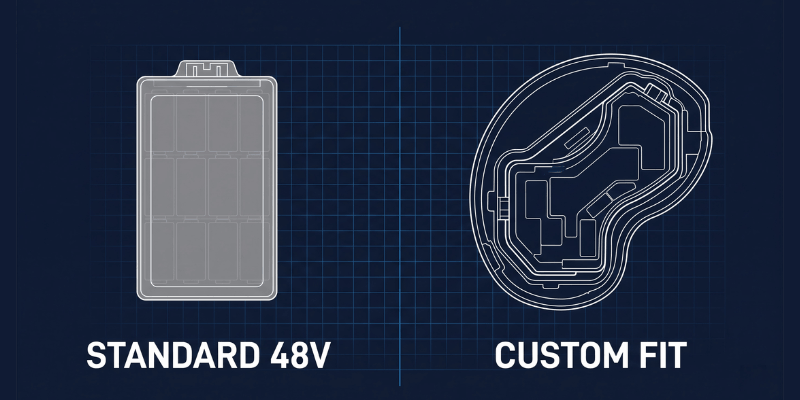
What can be customized?
A custom battery pack is not simply a standard battery with a different label. Each project can be engineered around your electrical requirements, installation space, operating environment, communication needs, and compliance targets.
Electrical Design
Voltage, capacity, continuous and peak current, charging profile, cell configuration, BMS protection thresholds, and CAN or RS485 communication.
Mechanical Integration
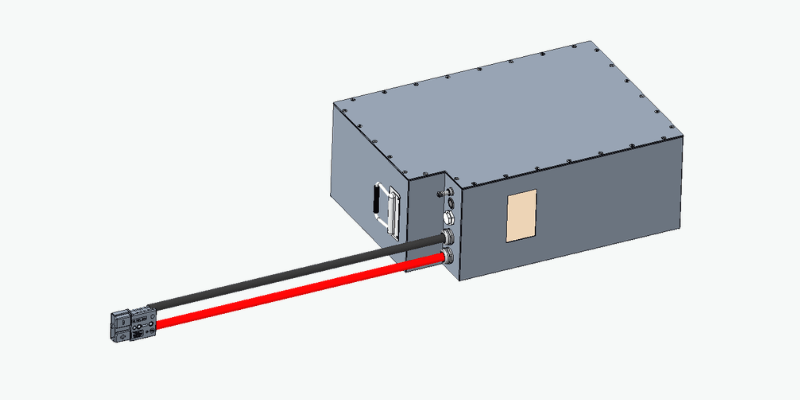
Dimensions, weight, mounting points, connector type, cable routing, aluminum or plastic enclosure, vibration resistance, and IP protection.
Chemistry Selection
LiFePO4 for safety and cycle life, or lithium-ion chemistries such as NMC and NCA when energy density and reduced weight are priorities.
Testing & Compliance
Prototype validation, transport testing, thermal and electrical testing, traceability, and support for UN38.3, IEC, UL, and application-specific requirements.
What you get: custom battery pack development in 60 seconds
Custom lithium battery pack development takes 8-12 weeks for standard packs when you’re starting from initial requirements and design. If your design is already finalized and it’s a simple customization, standard cells, off-the-shelf BMS, no new enclosure tooling, production can complete in as little as 4 weeks. Adding mold tooling, custom BMS firmware, or safety certifications will extend this timeline. With full UL or IEC certifications, the total cycle typically reaches 14-18 weeks from initial consultation.
The process: Define electrical specs and environmental requirements. Select cell chemistry (LFP for cycle life, NMC for energy density). Design BMS with appropriate protection thresholds. Engineer thermal management and enclosure. Build and test prototypes. Obtain compliance certifications (UN38.3, UL, IEC). Scale to production.
Costs: $3,000-$8,000 for a single standard like UN38.3 (one-time), $40-$150 for BMS, $10-$150 for enclosure. Full UL certification, including testing and factory follow-up inspection, commonly runs $12,000-$20,000+ depending on scope. Cells are 40-60% of total pack cost, and all of these figures shift with the pack’s voltage and capacity, a 12V 20Ah pack and a 96V 200Ah pack land in very different price territory.
Phase 1: requirements definition
The first conversation with your battery supplier produces a technical specification document. Incomplete specs are the top cause of project delays. They add 3-6 weeks or force redesigns after prototype testing.
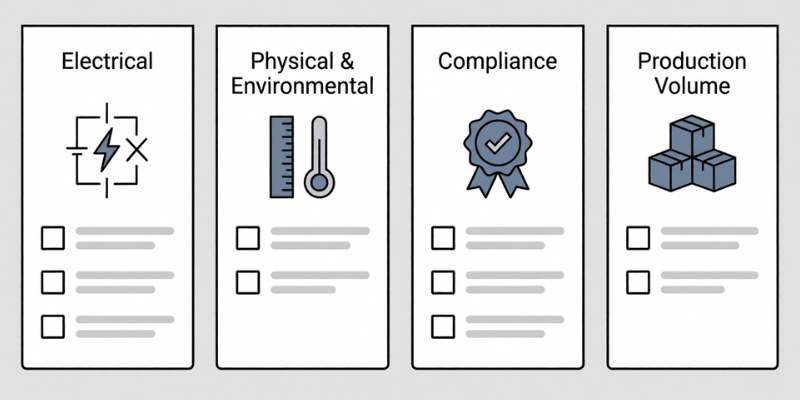
Electrical requirements (non-negotiable)
Nominal voltage: Specify in volts. Common industrial voltages: 12V, 24V, 36V, 48V, 72V, 96V. Non-standard voltages (53.2V, 80V) require custom cell configurations.
Capacity: State in amp-hours (Ah) or watt-hours (Wh). Example: “50Ah at nominal voltage” or “2.5kWh total energy.”.”
Continuous discharge current: The steady-state current your application draws during normal operation. This determines cell selection and BMS rating.
Peak discharge current: Maximum current for short duration. Specify seconds. Example: “200A peak for 10 seconds during motor startup.”.”
Charge current: How fast you need to recharge. Higher charge rates (>1C) require active thermal management.
Operating voltage range: Min/max cutoff voltages. Example: “42V min, 54.6V max for a 48V nominal pack.”.”
Physical and environmental constraints
Dimensions: Maximum L × W × H in millimeters. If mounting space is fixed, state it upfront. Dimensional constraints limit cell choice and capacity.
Weight: Maximum in kg. Weight matters for mobile applications (drones, AGVs, marine). Less critical for stationary equipment.
Mounting and vibration: Orientation restrictions (must work upright only vs any angle). Vibration levels per MIL-STD-810 or equivalent.
IP rating: IP65 (dust-tight, water jets), IP67 (submersion 1 meter for 30 min), IP68 (continuous submersion). Higher ratings add cost ($60-$150) and reduce cooling efficiency.
Operating temperature: Standard range is 0°C to 45°C. Extended range (-20°C to 60°C) requires premium cells and adds 15-30% to cell cost.
Compliance and certifications
Transportation (UN38.3): Required for all lithium batteries shipped by air or sea. Cost: $3,000-$8,000. Timeline: 4-6 weeks.
Safety standards:
- IEC 62133-2 (international): $4,000-$10,000
- UL 2054/UL 1642 (North America): $5,000-$20,000+. Basic component recognition testing lands at the lower end. Full UL Listing, which includes quarterly factory follow-up inspections (FUII) and broader scope testing, is what pushes costs past $20,000.
- Industry-specific: ABYC E-13 (marine), UL 2271 (e-mobility), IEC 62619 (industrial)
EMC: EN 55014 or equivalent if your pack includes wireless communication. Also required if your product needs CE marking.
Production Volume
Initial order: Minor customization with no new tooling has no hard MOQ. Projects requiring custom BMS firmware, enclosure tooling, or specialized cells typically need 100+ units, rising to 300-500 units for heavily customized packs with certifications.
Annual forecast: Helps manufacturer plan cell procurement and production scheduling.
Common mistake: Defining peak current incorrectly. If you say “50A continuous” but your actual load is 30A steady-state with 80A peaks for 5 seconds, your BMS will trip on the first peak. State both: “30A continuous, 80A peak for 5 seconds, frequency: once per minute.”.”
Phase 2: cell chemistry selection
Cell chemistry determines energy density, cycle life, safety characteristics, and cost. The 2019 Nobel Prize in Chemistry was awarded for the development of lithium-ion batteries. It recognized the fundamental research that made rechargeable lithium technology possible.
LFP vs NMC vs NCA: engineering comparison
| Parameter | LiFePO4 (LFP) | NMC (Li-ion) | NCA (Li-ion) |
| Energy density | 90-120 Wh/kg | 150-220 Wh/kg | 200-260 Wh/kg |
| Cycle life (to 80%) | 3,000-5,000 cycles | 1,000-2,000 cycles | 500-1,000 cycles |
| Thermal runaway onset | >210°C | 150°C | 130°C |
| Cost per kWh | $120-$180 | $150-$220 | $200-$300 |
| Best for | Stationary, marine, industrial | Drones, e-mobility, portables | Aerospace, racing, performance |
| Requires active cooling above | 3C discharge | 2C discharge | 1.5C discharge |
When to choose LFP:
- Cycle life is critical (forklifts, energy storage, marine)
- Safety comes first (passenger vehicles, medical)
- Operating temperature varies widely
- Weight doesn’t matter (stationary applications)
When to choose NMC:
- Weight and space are constrained (drones, portable devices)
- Moderate cycle life is acceptable (1,000-2,000 cycles)
- You need higher voltage per cell (3.6V nominal vs 3.2V for LFP)
When to choose NCA:
- Maximum energy density is non-negotiable
- Application is weight-critical (aerospace, racing drones)
- You can accept shorter cycle life (500-1,000 cycles)
- Budget supports premium cells
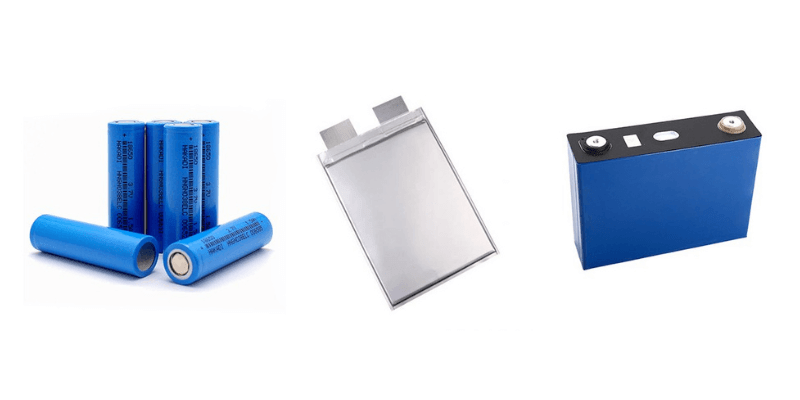
Cell form factor
Cylindrical cells (18650, 21700, 26650, 32700):
- Mature supply chains, extensive test data
- High surface-area-to-volume ratio (easier to cool)
- Require more complex mechanical assembly (hundreds of individual welds)
- Best for: High-discharge applications, designs prioritizing thermal management
Prismatic cells:
- Simpler pack layout, fewer welds
- Higher volumetric density (10-15% more capacity per liter)
- Heat concentrates internally (harder to cool)
- Best for: Space-constrained stationary applications
Pouch cells:
- Maximum space use
- Require rigid external support (swell during charging)
- Difficult to cool (large flat surfaces, minimal airflow paths)
- Best for: Consumer electronics, low-discharge portable devices
Cell grade and manufacturer
Tier 1 cells (CATL, EVE, Samsung SDI, LG Energy Solution, Panasonic): Consistent capacity (±2% tolerance). Documented reliability data. 30-50% price premium.
Tier 2 Chinese manufacturers: Lower cost. Wider capacity tolerance (±5%). Less performance data available.
Grade B cells (avoid): Recovered cells, cells that failed initial QC, or off-brand cells. Save 15-30% upfront but introduce 3-5x higher failure risk.
Verification: Ask your manufacturer which cell supplier they use. Request cell specification sheets showing capacity distribution data, internal resistance, and cycle life test results under your operating conditions.
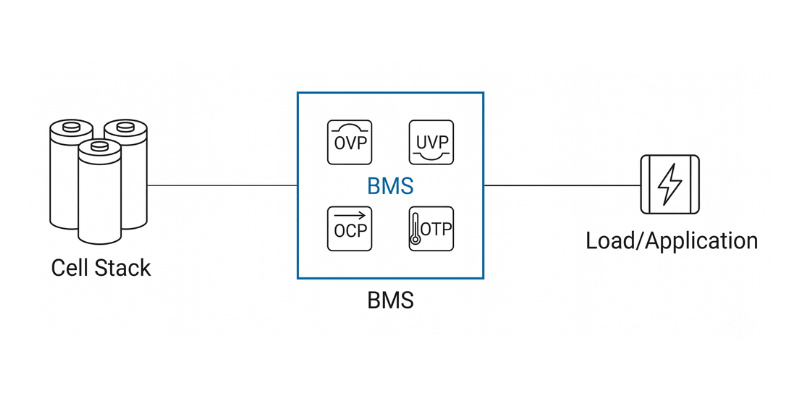
Phase 3: BMS and electrical design
The Battery Management System protects cells from electrical abuse and provides monitoring. Every custom lithium battery pack needs a BMS. Industry data on field returns for custom lithium packs commonly attributes 30-50% to BMS-related issues in the first year, more than any other single component.
BMS architecture options
Basic protection BMS ($15-$40):
- Overvoltage, undervoltage, overcurrent, short circuit protection
- Passive cell balancing (50-100mA via resistors)
- No communication
- Sufficient for: Simple applications, low-volume projects, cost-sensitive designs
Smart BMS with communication ($40-$80):
- All basic protections plus CAN, RS485, Bluetooth, or UART
- Real-time data: voltage per cell, current, temperature, SOC, SOH
- Remote monitoring and diagnostics
- Essential for: Fleet applications, predictive maintenance, warranty tracking
High-current BMS ($80-$150):
- Rated for >100A continuous discharge
- Active cell balancing (capacitor or inductor-based, up to 2A)
- Multiple temperature sensors (one per parallel group minimum)
- Required for: High-discharge applications, large packs (>16S configuration)
For detailed technical breakdown of how BMS works including protection algorithms, balancing strategies, and communication protocols, see What Is A Battery Management System (BMS)?
Critical BMS parameters
Continuous discharge current rating: Must exceed your application’s steady-state current by 20% minimum. A 50A application needs a 60A BMS.
Cell balancing type:
- Passive balancing: Dissipates energy through resistors. Slow (50-100mA). Works for most applications.
- Active balancing: Transfers energy between cells. Fast (up to 2A). Extends pack life in applications with frequent partial charging (solar, regenerative braking).
See Active vs Passive BMS Balancing for when active balancing delivers measurable lifecycle improvements.
Temperature monitoring: Minimum one thermistor per parallel group. High-current packs (>50A) need one per parallel group plus one for the BMS itself.
Protection thresholds: These determine when BMS cuts power:
- Overvoltage: Typically 4.2V per cell (NMC) or 3.65V (LFP)
- Undervoltage: Typically 2.5V per cell (NMC) or 2.0V (LFP)
- Overcurrent: Set 10-20% above your peak current
- Overtemperature: 55-60°C cutoff for discharge, 45-50°C for charge
Common mistake: Using default BMS protection thresholds without validating against your actual load profile. A BMS tuned for consumer electronics will be too conservative for industrial equipment. It will shut down prematurely.
Phase 4: mechanical design and thermal management
The enclosure provides physical protection, thermal management, electrical isolation, and environmental sealing. Mechanical vulnerabilities (cracked enclosures, loose connectors, and vibration-induced fatigue) represent a major category of field reliability issues.
Enclosure material selection
| Material | Cost | Thermal Conductivity | Weight | Impact Resistance | Best For |
| ABS plastic | $ | Poor | Light | Moderate | Low-power portable devices |
| PC (Polycarbonate) | $ | Poor | Light | Good | Standard industrial applications |
| Flame-retardant plastic (UL94 V-0) | $$ | Poor | Light | Good | UL/CE certified products |
| Aluminum | $$$ | Excellent | Medium | Excellent | High-discharge applications, EMI shielding |
| Steel | $$ | Good | Heavy | Superior | Harsh environments, forklifts |
Thermal management strategy by discharge rate
Under 1C discharge (passive cooling):
- Natural convection sufficient
- Maintain 2mm air gap between cylindrical cells
- Enclosure needs ventilation slots
- Cost: $0 additional
1C to 2C discharge (conductive heat spreading):
- Aluminum or copper heat spreaders
- Thermal interface pads between cells and spreaders
- Cost: 5-10% of pack cost
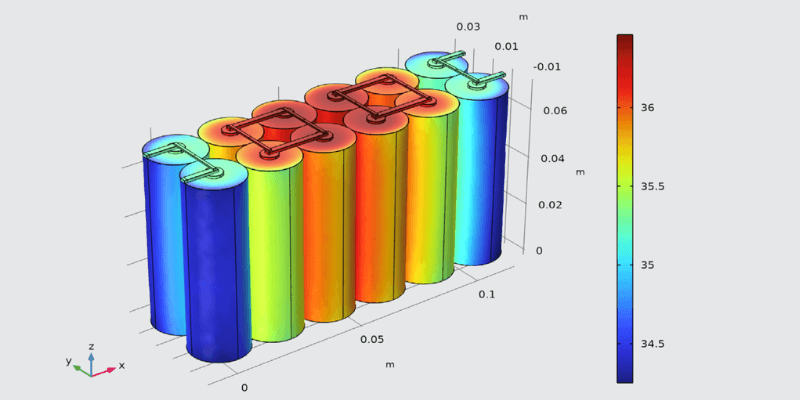
- Example: 48V 50Ah pack at 1.5C generates 40W heat
2C to 3C discharge (forced air cooling):
- Fans and ducting
- Requires airflow reaching all cells
- Adds noise, power draw, maintenance
- Cost: $30-$80 per pack
Above 3C discharge (liquid cooling):
- Cold plates with water-glycol or dielectric fluid
- Maintains tight temperature distribution (±2°C across pack)
- Required for fast charging (>1C charge rate)
- Cost: $150-$400 per pack plus external cooling system
Heat generation calculation: Power dissipated (W) = I² × R, where I is discharge current and R is pack internal resistance. A 50A discharge through a pack with 20mΩ resistance generates 50W of heat.
Connector Selection
Current-carrying capacity determines connector choice. Undersized connectors overheat and fail.
| Connector Type | Current Rating | Contact Resistance | Best For |
| Anderson PowerPole | 15-45A | 0.5-1.0 mΩ | Portable equipment, field-serviceable |
| XT60 | 60A peak / 30-45A continuous | 0.5 mΩ | Drones, RC applications |
| XT90 | 90A peak / 60-70A continuous | 0.3 mΩ | High-current drones, e-bikes |
| Molex MicroFit | 5-13A per pin | 2 mΩ | Low-power electronics |
| Bolted terminals (M6, M8) | 100-300A | <0.1 mΩ | Industrial equipment, forklifts |
Power dissipation at connector: A connector with 1mΩ resistance carrying 50A dissipates 2.5W as heat at the connection point. Specify gold-plated contacts for applications requiring >5,000 mating cycles.

Phase 5: prototype testing
Prototype validation costs $2,000-$5,000 but catches design issues when changes are cheap. Testing after production tooling adds $15,000-$40,000 to fix.
Required Tests
Electrical performance validation:
- Capacity test: Full charge/discharge at 0.2C verifies rated capacity
- Continuous discharge: Run at rated current, measure voltage sag and runtime
- Peak current: Apply short-duration high-current pulses, verify BMS doesn’t trip
- Charge acceptance: Charge at specified current, verify charge time
Thermal validation:
- Temperature rise test: Discharge at maximum continuous current while logging all cell temperatures
- Thermal imaging during discharge identifies hot spots
- Verify no cell exceeds 55-60°C (typical max operating temperature)
Mechanical validation:
- Vibration: MIL-STD-810 or IEC 60068-2-64
- Connector retention force and mating cycles
Environmental:
- Cold temperature discharge (down to minimum operating temperature)
- Hot temperature discharge (up to maximum operating temperature)
- Humidity exposure if IP67/IP68 rating required
BMS functional testing:
- Overvoltage: Charge beyond max voltage, verify cutoff
- Undervoltage: Discharge until BMS shuts down, verify cutoff voltage
- Overcurrent: Apply load above rated current, verify BMS trips within 1 second
- Short circuit: Apply dead short, verify BMS isolates cells within 100ms
- Overtemperature: Heat pack, verify thermal cutoff activates at set threshold
Common failure at prototype stage: Pack overheats during continuous discharge because thermal analysis was theoretical. Thermal imaging reveals hot spots at specific cells. Fix: Add heat spreaders or increase air gap between cells. Cost to fix in prototype phase: $300. Cost to fix after tooling: $8,000-$15,000.
Phase 6: compliance and certification
Certifications are mandatory if you ship internationally, install batteries in vehicles, or sell into regulated markets.
UN38.3 (Transportation)
What it tests: Altitude simulation, thermal cycling, vibration, shock, external short circuit, impact, overcharge, forced discharge.
Timeline: 4-6 weeks
Cost: $3,000-$8,000 per battery model
Why required: Without UN38.3, you cannot legally ship lithium batteries via FedEx, UPS, DHL, or freight forwarders. The certification follows the design, so changes require retesting.
Test procedures: Full requirements detailed in UN Manual of Tests and Criteria, published by the United Nations Economic Commission for Europe.
Safety Standards
IEC 62133-2 (International):
- Cell and battery safety standard
- Covers electrical and mechanical abuse
- Required for consumer products sold in Europe
- Cost: $4,000-$10,000
UL 2054 / UL 1642 (North America):
- UL listing required for batteries in buildings or vehicles sold in US/Canada
- Tests: overcharge, short circuit, crush, impact, thermal abuse
- Cost: $5,000-$20,000+. Basic component recognition testing lands at the lower end. Full UL Listing, which includes factory follow-up inspections and broader scope testing, is what pushes costs past $20,000.
Industry-Specific Standards
Marine (ABYC E-13): Lithium batteries in boats require ignition protection and integration with DC electrical systems. See ABYC E-13 Standards For Lithium Batteries.
E-mobility (UL 2271, EN 50604-1): E-bikes, scooters, light EVs. Cost: $8,000-$15,000.
Industrial (IEC 62619): Forklifts and material handling equipment.
For detailed comparison of UN38.3, IEC 62133, and IEC 62619 including which standard applies to your application, see UN38.3, IEC 62133, and IEC 62619: Battery Compliance Guide.
EMC Testing
Battery packs with smart BMS frequently encounter issues during initial EMC testing when filtering on power and communication lines is inadequate.
Common failure modes:
- Radiated emissions exceed limits on CAN/RS485 lines
- Conducted emissions on main power output
- Susceptibility to external RF interference
Design fixes:
- Ferrite beads on communication lines
- Shielded cable for external connections
- Pi-filter on main power output
- Continuous ground plane under wireless modules

Phase 7: production and quality control
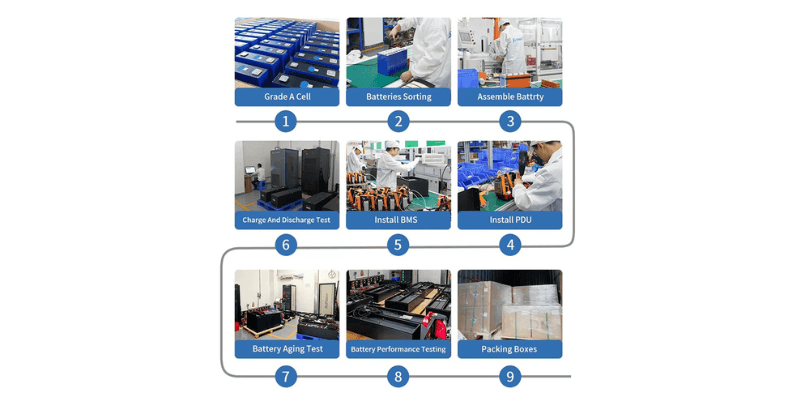
Manufacturing quality determines field reliability. Quality control checkpoints at each process step prevent defects from reaching customers.
Manufacturing Process
Cell incoming inspection:
- Voltage verification (cells arrive at 30-50% SOC for storage safety)
- Visual inspection for physical damage
- Capacity testing on 2% sample of incoming shipment
- Internal resistance measurement
Cell assembly:
- Spot welding or laser welding (cylindrical cells)
- Ultrasonic welding for tabs (pouch/prismatic cells)
- Series/parallel connections per electrical design
- BMS connection and wire routing
Functional testing:
- Initial voltage and resistance check
- BMS programming and parameter configuration
- Protection function testing (over-current, over-voltage triggers)
Enclosure assembly:
- Cell pack insertion
- Thermal interface material application
- Connector installation
- Sealing (gaskets, potting, or welding for IP67/IP68)
Final testing:
- Visual and dimensional inspection
- Electrical performance test (capacity, discharge under load)
- Hi-pot test (dielectric strength between cells and enclosure)
Advanced quality control (high-reliability applications)
X-ray inspection: Detects cold welds or internal voids in weld joints. Required for medical, aerospace, defense.
100% burn-in testing: Charge/discharge cycling for 3-5 cycles before shipment. Catches infant mortality failures.
Serialization and traceability: Links each pack to cell batch numbers for failure analysis.
Lead times:
- Prototype (5-10 units): 2-3 weeks
- Pilot production (50-100 units): 4-6 weeks
- Volume production (>500 units): 8-12 weeks
Lead time extends if:
- Custom certifications required: +6-10 weeks
- Custom enclosure tooling needed: +3-4 weeks
- Tier 1 cells specified: +8-12 weeks (procurement lead time)
Cost breakdown and optimization
Understanding cost drivers helps you optimize performance without over-engineering.
Typical cost structure (48V 100Ah custom pack example)
Planning the budget around these numbers? The guide to cost control and engineering trade-offs in custom battery packs puts the cost blocks below into a complete project schedule.
| Component | % of Total Cost | Budget Option | Premium Option |
| Cells | 40-60% | $600 (Tier 2 Chinese, LFP) | $1,400 (Tier 1 Samsung/LG, NMC) |
| BMS | 10-20% | $25 (basic protection) | $120 (smart BMS, 100A, CAN) |
| Enclosure | 15-25% | $40 (standard plastic) | $180 (IP68 aluminum + thermal) |
| Assembly labor | 10-15% | $80 | $150 (X-ray inspection, burn-in) |
| Certifications (NRE) | One-time | $3,000 (UN38.3 only) | $20,000+ (UN38.3 + full UL Listing + ABYC) |
| Total unit cost | 200-unit volume | $800-$1,000 | $2,400-$2,800 |
Note on the Premium option: This price reflects a Tier 1 branded NMC cell pack (Samsung/LG) with a smart CAN-enabled BMS and IP68 aluminum enclosure. LFP has lower energy density than NMC, but its lower cell cost per Wh ($120-180 vs $150-220) and higher thermal stability often make it the more economical choice for volume-tolerant applications (stationary, marine, industrial). Swapping the Premium example from NMC to a high-end LFP cell typically lowers the total pack cost by $200-350 at 48V 100Ah, and $400-700 at higher capacities.
A note on voltage and capacity: Every figure in this table is anchored to a 48V 100Ah example. Pricing scales with both voltage and capacity, a 12V 20Ah pack costs a fraction of this, while a 96V 200Ah pack costs substantially more, since cell count and BMS complexity both increase with pack size. Use this table for cost proportions and structure, not as a quote for your specific configuration.
Cost optimization strategies
Strategy 1: Right-size for actual use case
Don’t over-spec. A marine trolling motor that averages 30A but peaks at 80A for 5 seconds doesn’t need cells sized for 80A continuous. Size cells for average current. Use BMS with high pulse-current rating.
Savings: 25-35% on cell cost by avoiding oversized pack.
Strategy 2: Standard voltage when possible
Non-standard voltages (53.2V, 80V) require custom series/parallel configurations and limit cell supplier options. If your application can work with 48V or 72V instead, you’ll have more cell choices. Better pricing too.
Savings: 10-20% on cells due to higher volume availability.
Strategy 3: Balance cycle life vs weight
For stationary applications where weight doesn’t matter, LFP delivers 2-3x the cycle life of NMC at 20-30% lower cost per kWh. For mobile applications, NMC’s higher energy density reduces system weight by 30-40%.
Example: Industrial UPS backup power → Choose LFP (lower cost, 5,000 cycles). Drone → Choose NMC (weight-critical, 1,000 cycles acceptable).
Strategy 4: Phased certifications
Start with UN38.3 (required for shipping). Add UL or IEC certifications only when you have confirmed customer demand or regulatory requirement.
Savings: Defer $5,000-$12,000 in certification costs until production volume justifies it.
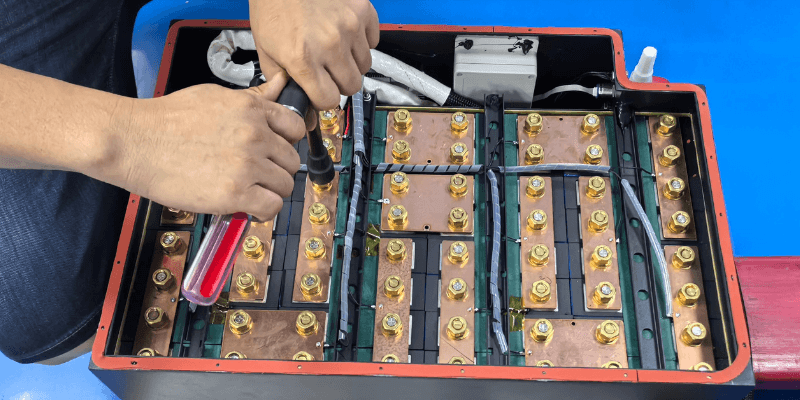
Common failures and how to avoid them
These seven failure modes represent the most frequent field and integration issues encountered in custom battery packs during their initial deployment.
Failure 1: BMS shuts down under normal load
Symptom: Battery cuts power during operation even though capacity remains.
Root cause: BMS overcurrent protection triggered because continuous current rating is too low. Or BMS is configured with default thresholds that don’t match your application.
Fix: Verify BMS continuous current rating exceeds your steady-state load by 20%. If using smart BMS, reprogram protection thresholds based on actual load profile testing.
Prevention: During prototype testing, log BMS events to see which protection triggers. Adjust thresholds before production.
Failure 2: thermal runaway in sealed enclosure
Symptom: Pack overheats during discharge, cells reach 70-80°C, BMS shuts down, or in extreme cases thermal runaway occurs.
Root cause: Inadequate thermal management in IP67/IP68 sealed enclosure. Heat has no escape path.
Fix: Add aluminum heat spreaders with thermal interface pads between cells and enclosure walls. If discharge rate exceeds 2C, integrate cold plate or liquid cooling.
Prevention: Thermal imaging during prototype testing reveals hot spots before production.
Failure 3: premature capacity loss (under 500 cycles)
Symptom: Pack loses 20% capacity after fewer than 500 cycles, despite being rated for 2,000+ cycles.
Root cause: Operating outside cell’s optimal conditions (too hot, too cold, charged to 100% and held there, or deep discharge below 20% SOC regularly).
Fix: If operating temperature is the issue, add thermal management or switch to extended-temperature cells. If charge/discharge profile is the issue, adjust BMS voltage cutoffs to keep cells in 20-80% SOC range.
Prevention: Request cell manufacturer’s cycle life test data at your specific operating conditions (temperature, C-rate, SOC window).
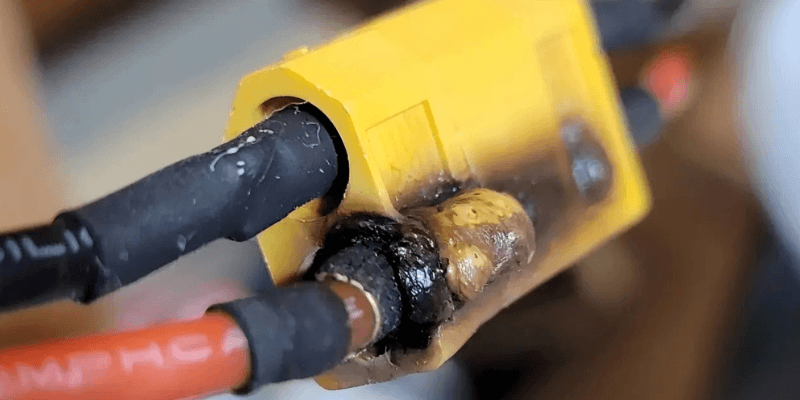
Failure 4: connector overheating and failure
Symptom: Connector melts or discolors during high-current discharge. Voltage drop at connector increases over time.
Root cause: Connector rated current is too low, contact resistance is high, or crimp quality is poor.
Fix: Use connector rated for 1.5x your continuous current. Specify gold-plated contacts. Verify crimp pull force during assembly (should require >20 lbs for Anderson PowerPole).
Prevention: Thermal imaging at connector during prototype testing shows hot spots before failure.
Failure 5: water ingress despite IP67/IP68 rating
Symptom: Water enters pack, shorts cells or damages BMS, pack fails.
Root cause: Gasket compressed incorrectly, potting compound has voids, or connector sealing is inadequate.
Fix: Use two-part silicone potting compound and vacuum de-gas to eliminate voids. Connector requires I
Prevention: Submersion test every prototype unit for 30 minutes at rated depth before approving production design.
Failure 6: EMC test failure
Symptom: Pack fails radiated emissions testing during certification. Redesign delays product launch by 6-10 weeks.
Root cause: Inadequate filtering on CAN/RS485 lines, no shielding on external cables, PCB layout issues.
Fix: Add ferrite beads on communication lines, use shielded cable, implement Pi-filter on main power output.
Prevention: Pre-compliance EMC testing during prototype phase (costs $500-$1,500, much cheaper than failing formal certification).
Failure 7: pack won’t fit after tooling
Symptom: Production packs are 2-5mm oversized in one dimension. Don’t fit mounting space. Requires enclosure redesign.
Root cause: Prototype was hand-built with tighter tolerances than production tooling delivers. Or cells swelled slightly more than expected during operation.
Fix: Add 2-3mm tolerance margin to all internal dimensions during design phase.
Prevention: Build at least 3 prototype units to verify dimensional consistency. Test under load for 50 cycles to verify no unexpected swelling.
For additional failure mode analysis including weld failures, cell imbalance, and field return diagnostics, see Causes Of Lithium Battery Pack Failure.
Custom battery pack FAQs
How long does it take to develop a custom battery pack?
4 weeks for finalized designs; 8-12 weeks from scratch; 14-18 weeks with full certifications (UL/IEC).
What’s the minimum order quantity?
No hard MOQ for minor tweaks. 100+ units for projects requiring tooling or custom BMS. 300-500 units for heavy customization with certifications.
How much do certifications cost?
UN38.3: $3k-$8k. UL/IEC: $5k-$20k depending on voltage and cell count. One-time cost per model.
Can lithium batteries work in cold weather?
Standard cells charge above 0°C. Low-temp grade cells allow slow charging down to -20°C. Heated packs are recommended for extreme cold.
What causes lithium battery fires?
Primarily thermal runaway triggered by physical damage, electrical abuse (overcharge), or defects. Prevented by a robust BMS, rigid enclosure, and quality cells. See Understanding Battery Thermal Runaway: Causes, Risks, and Prevention for detailed technical analysis.
Can you match the form factor of an existing pack?
Yes. Send us the outer dimensions, connector types, mounting points, and communication protocol of your current pack, and we will engineer a drop-in replacement that upgrades the cells and BMS while keeping the enclosure interface unchanged. This is the fastest path for OEMs maintaining legacy equipment, because no mechanical requalification is needed on your side.
What information do you need to quote a custom pack?
Nominal and maximum voltage, continuous and peak discharge current, required capacity or runtime, operating temperature range, enclosure constraints, target certifications, and estimated annual volume. The more complete this list is, the closer the first quotation lands. Send it through the contact form and our engineering team returns a manufacturing evaluation within one business day.
Who owns the design and tooling?
You do. When development or tooling costs are covered on the customer side, all CAD files, BMS firmware, and mold ownership transfer to you, protected by a signed NDA before any technical exchange. The same terms apply to both OEM and private-label programs; see OEM and private-label battery packs for the full engagement model.
Can finished packs be shipped worldwide?
Yes. Every pack leaves the factory with a UN38.3 test summary and packaging compliant with air and sea freight rules, and we ship DDP to most destinations in North America and Europe. For repeat production orders, consolidating into full pallets cuts per-unit freight noticeably.