

Als u met batterijen werkt, deze aanschaft of specificeert voor industriële toepassingen, bent u waarschijnlijk de termen anode en kathode tegengekomen.
Deze twee elektroden vormen de basis van hoe elke batterij werkt.
Als u ze in verwarring brengt, riskeert u verkeerde specificaties, onjuiste installaties of kostbare inkoopfouten.
In deze gids worden beide duidelijk uitgelegd, zonder onnodige complexiteit.
Het korte antwoord
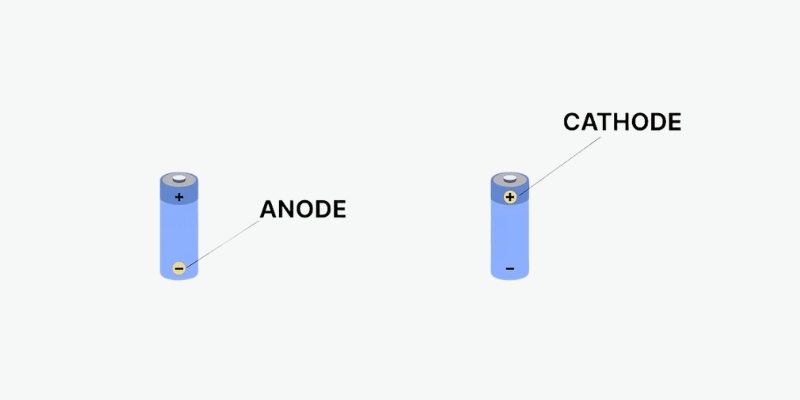
Anode = negatieve elektrode. Kathode = positieve elektrode.
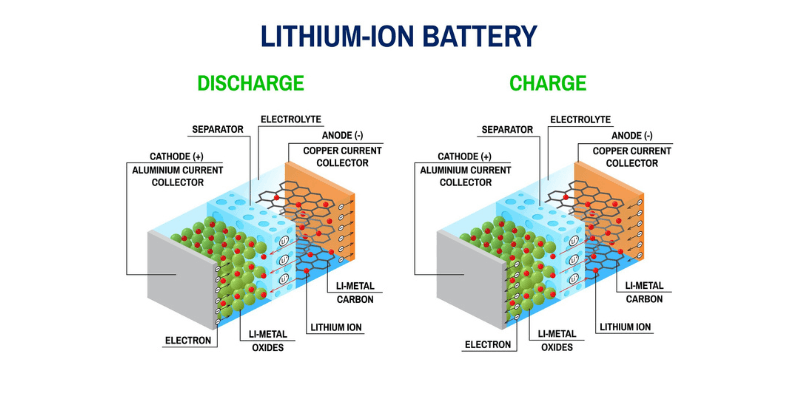
Tijdens de ontlading laat de anode elektronen vrij en ontvangt de kathode deze.
Tijdens het opladen keren de rollen om op dezelfde fysieke elektroden.
De meeste batterijartikelen slaan dit onderscheid over. Het doet er meer toe dan mensen denken.
Wat is een anode?
De anode is de negatieve elektrode in een batterij.
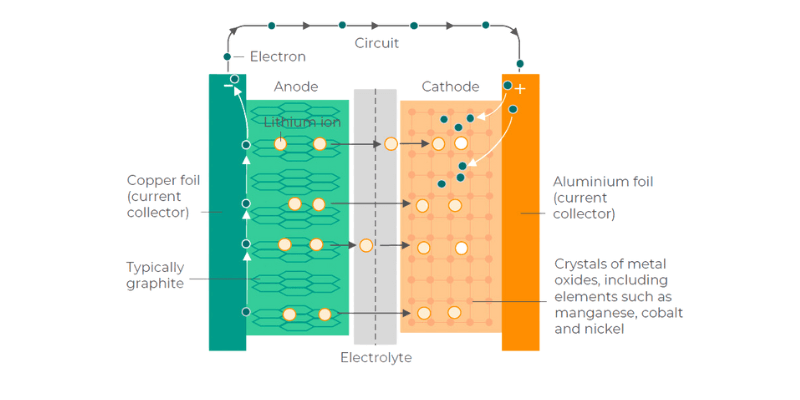
Het is waar oxidatie plaatsvindt, wat betekent dat het elektrodemateriaal elektronen verliest tijdens de elektrochemische reactie.
Die elektronen reizen via een extern circuit naar de kathode.
Die beweging van elektronen noemen we elektriciteit.
In lithium-ionbatterijenslaat de anode ook lithiumionen op wanneer de batterij wordt opgeladen.
Terwijl de batterij ontlaadt, stromen die ionen terug door de elektrolyt naar de kathode.
Veel voorkomende anodematerialen in lithium-ionbatterijen
| Materiaal | Status | Belangrijkste kenmerken |
| Grafiet | Industriestandaard | Stabiele, lage kosten, lange levensduur |
| Silicium | Opkomend | Hogere energiedichtheid, uitbreidingsuitdagingen |
| Grafiet + siliciummengsel | Toenemende adoptie | Evenwicht tussen capaciteit en stabiliteit |
| Lithium metaal | Volgende generatie | Maximale energiedichtheid, nog steeds gecommercialiseerd |
Grafiet blijft het dominante anodemateriaal in de meeste commerciële lithium-iontoepassingen vanwege de bewezen stabiliteit en kostenefficiëntie.
Silicium wint terrein in hoogwaardige toepassingen, maar vereist zorgvuldige engineering om de volume-uitbreiding tijdens het opladen te beheersen.
Wat is een kathode?
De kathode is de positieve elektrode.
Hier vindt reductie plaats, wat betekent dat het elektrodemateriaal tijdens de ontlading elektronen opneemt.
Het kathodemateriaal heeft de grootste invloed op de prestatiekenmerken van een batterij, inclusief energiedichtheid, thermische stabiliteit, cyclus leven, en kosten.
Voor B2B-kopers en -ingenieurs is de kathodeselectie vaak de meest kritische specificatiebeslissing.
Gemeenschappelijke kathodematerialen en hun afwegingen
| Materiaal | Afkorting | Energiedichtheid | Cycle Life | Thermische stabiliteit | Beste voor |
| Lithium-ijzerfosfaat | LFP | Gematigd | Zeer hoog | Uitstekend | Energieopslag, commerciële elektrische voertuigen, industrieel |
| Lithium-nikkel-mangaan-kobalt | NMC | Hoog | Hoog | Goed | EV's, elektrisch gereedschap, industriële apparatuur |
| Lithiumkobaltoxide | LCO | Hoog | Gematigd | Lager | Consumentenelektronica |
| Lithium-nikkel-kobalt-aluminium | NCA | Zeer hoog | Hoog | Gematigd | EV's met hoge prestaties |
LFP heeft een sterke groei doorgemaakt in industriële en commerciële toepassingen vanwege het veiligheidsprofiel en de lange levensduur, zelfs ten koste van een iets lagere energiedichtheid.
NMC blijft de voorkeur genieten als gewicht en energiedichtheid de belangrijkste beperkingen zijn.
Anode versus kathode: directe vergelijking
| Eigendom | Anode | Kathode |
| Polariteit | Negatief ( – ) | Positief (+) |
| Reactietype | Oxidatie | Afname |
| Elektronen beweging | Geeft elektronen vrij | Ontvangt elektronen |
| Ionenbeweging tijdens ontlading | Geeft lithiumionen vrij | Ontvangt lithiumionen |
| Ionenbeweging tijdens het opladen | Ontvangt lithiumionen | Geeft lithiumionen vrij |
| Huidige verzamelaar | Koperfolie | Aluminiumfolie |
| Typisch materiaal | Grafiet | LFP, NMC, NCA, LCO |
Een veelvoorkomend punt van verwarring: opladen versus ontladen
Veel technische artikelen beschrijven de anode en kathode zonder aan te geven of de batterij aan het opladen of ontladen is.
Dit is belangrijk.
Tijdens ontslag:
- De negatieve elektrode is de anode
- De positieve elektrode is de kathode
Tijdens het opladen:
- De positieve elektrode wordt de anode
- De negatieve elektrode wordt de kathode
De fysieke elektroden bewegen of veranderen niet.
Alleen hun elektrochemische rollen veranderen afhankelijk van de richting van de stroom.
Wanneer u batterijen aanschaft of specificaties bekijkt, ga er dan van uit dat artikelen verwijzen naar de ontladingsstatus, tenzij anders vermeld.
Hoe anodes en kathoden worden vervaardigd
Beide elektroden volgen een vergelijkbaar productieproces, hoewel de materialen en foliesubstraten verschillen.
Stap 1: Materiaalsynthese
Het actieve materiaal wordt gesynthetiseerd tot de vereiste verbinding en volgens specificatie verfijnd.
Stap 2: Mengmestbereiding
Het actieve materiaal wordt vermalen tot poeder en gemengd met bindmiddelen en geleidende additieven om een uniforme slurry te vormen.
Stap 3: Coaten
De slurry wordt op metaalfolie aangebracht. Koperfolie voor anoden, aluminiumfolie voor kathodes.
Stap 4: Drogen en kalanderen
De gecoate folie wordt gedroogd en door rollen samengeperst om de juiste elektrodedichtheid en -dikte te bereiken.
Stap 5: Snijden en celassemblage
Elektroden worden op maat gesneden en met scheiders en elektrolyt samengevoegd tot het uiteindelijke celformaat.
Coatinguniformiteit en elektrodedichtheid bij stap 3 en 4 hebben rechtstreeks invloed op de celcapaciteit, interne weerstand en levensduur.
Dit is de reden waarom de kwaliteit van de productie van elektroden een belangrijke onderscheidende factor is tussen batterijleveranciers.
Waarom dit belangrijk is voor B2B-applicaties
Begrijpen hoe anodes en kathodes werken helpt met meer dan alleen basisproductkennis.
Voor inkoop en sourcing:
Kathodechemie bepaalt de kosten, het risico in de toeleveringsketen en de prestaties. LFP gebruikt geen kobalt, waardoor de blootstelling aan de volatiliteit van de kobaltprijs wordt verminderd. NMC bevat nikkel en kobalt, beide onderhevig aan leveringsbeperkingen.
Voor engineering en integratie:
Weten hoe elektroden zich gedragen tijdens laad- en ontlaadcycli is bepalend voor het ontwerp van het thermisch beheer, de instellingen van het batterijbeheersysteem en veilige bedrijfsparameters.
Voor kwaliteitsbeoordeling:
De kwaliteit van de elektrodecoating, de zuiverheid van het actieve materiaal en de integriteit van de stroomcollector zijn indicatoren voor de algehele celkwaliteit. Deze zijn de moeite waard om te verifiëren bij leveranciers.
Anodes en kathoden voorbij batterijen
Dezelfde elektrochemische principes zijn van toepassing op andere industriële contexten.
Kathodische beschermingssystemen
Pijpleidingen, offshore-constructies en opslagtanks gebruiken opofferingsanodes om corrosie te voorkomen. Een reactieve metalen anode corrodeert bij voorkeur en beschermt de structuur die als kathode fungeert.
Industriële boilers
Commerciële boilers gebruiken anodestaven van magnesium of aluminium om stalen tanks tegen corrosie te beschermen. In industriële omgevingen met grote volumes hebben onderhoudsschema's voor anodestaven een directe invloed op de levensduur van de apparatuur.
Galvaniseren en oppervlaktebehandeling
Anodes en kathodes controleren de metaalafzetting bij industriële galvaniseerprocessen, waardoor de laagdikte, hechting en afwerkingskwaliteit worden beïnvloed.
FAQ
Is de anode altijd negatief?
Bij een ontladende batterij wel. De anode is de negatieve elektrode waar oxidatie optreedt. Tijdens het opladen neemt de negatieve elektrode de rol van kathode over, maar fysiek is het nog steeds dezelfde elektrode.
Welke kathodechemie moet ik specificeren voor industriële energieopslag?
LFP heeft over het algemeen de voorkeur voor stationaire energieopslag en toepassingen waarbij levensduur en veiligheid prioriteit hebben boven energiedichtheid. Voor mobiele of gewichtsgevoelige toepassingen biedt NMC doorgaans een betere balans.
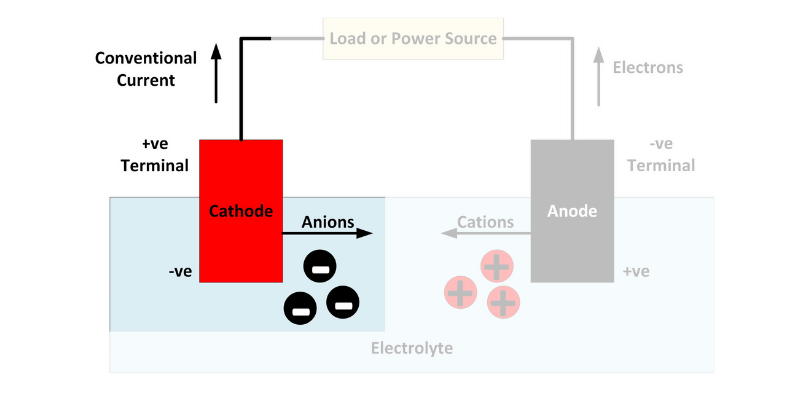
Wat is het verschil tussen de positieve elektrode en de kathode?
Ze verwijzen naar dezelfde fysieke elektrode tijdens ontlading. De positieve elektrode heeft altijd een hogere potentiaal dan de negatieve. Tijdens ontlading fungeert het als kathode. Tijdens het opladen fungeert het als anode. Gebruiken “positief” En “negatief” vermijdt dubbelzinnigheid bij de bespreking van beide staten.
Waarom heeft kathodemateriaal zo veel invloed op de batterijkosten?
Het actieve kathodemateriaal neemt een groot deel van de totale celkosten voor zijn rekening. De betrokken metalen, met name nikkel, kobalt en lithium, hebben volatiele marktprijzen en complexe toeleveringsketens.
Hoe identificeer ik de anode en kathode op een batterij?
Zoek naar de positieve (+) en negatieve (-) markeringen. De negatieve pool is de anodezijde. De positieve pool is de kathodezijde. Bij lithium-ioncellen geeft de koperen stroomcollector aan de binnenkant de anode aan en het aluminium de kathode.
Conclusie
De anode en kathode zijn de twee elektroden die ervoor zorgen dat elke batterij werkt.
De anode is negatief en verliest elektronen tijdens het ontladen.
De kathode is positief en verkrijgt ze.
Kathodechemie is de belangrijkste drijfveer voor batterijprestaties, kosten en supply chain-overwegingen.
Voor iedereen die lithium-ionbatterijen specificeert, inkoopt of integreert in commerciële of industriële toepassingen, leidt het begrijpen van deze basisprincipes tot betere productbeslissingen en minder technische verrassingen.