

A small group of very large companies now makes most of the world’s lithium-ion batteries. From January to September 2026, the 10 largest EV battery makers supplied about 88% of all EV batteries installed worldwide, and the seven Chinese companies among them held about 73% of the market.
This 2027 sourcing guide covers 15 major lithium-ion battery manufacturers based on public market data, not opinion: January to September 2026 EV battery installations from SNE Research (ranking the top 10 by EV volume) and 2025 energy storage cell shipments from Benchmark Mineral Intelligence (used alongside EV figures for companies 11 to 15).
Sourcing Router: Cell Gigafactories (Multi-MWh Scale) vs. Custom Pack Manufacturers (100–5,000 pcs/yr)
| Procurement Criterion | Cell Gigafactories (Multi-MWh Scale) | Custom Pack Manufacturers (100–5,000 pcs/yr) |
|---|---|---|
| Typical Annual Volume / Scale | Multi-MWh or 500,000+ bare cells/year | 100–5,000 packs/year (pilot samples from 1–20 units) |
| Engineering Deliverable | Bare cells or standardized EV/ESS modules | Turnkey enclosure, custom CAN/RS485 BMS, harness and potting |
| Certification Handling | Cell-level UL 1642 / IEC 62619 (cell scope) | Pack-level UN38.3, IEC 62133-2, IEC 62619 (industrial battery), UL 2054/2271, EU 2023/1542 |
| Best Fit Buyers | Tier-1 EV OEMs and utility-scale BESS developers | Industrial robotics, AGV, marine, medical and specialty OEMs |
If your annual demand is between 100 and 5,000 custom packs, compare custom pack engineering options in our China custom battery pack manufacturers guide or review our custom battery pack manufacturing capabilities directly.
How We Ranked These Battery Manufacturers
- EV batteries: Battery capacity installed in electric vehicles sold worldwide from January to September 2026 (SNE Research). The global total was 994.5 GWh, up 19.7% year on year.
- Energy storage: Cell shipments for battery energy storage systems in 2025 (Benchmark Mineral Intelligence). Global shipments passed 600 GWh, nearly double the 2024 level.
- Order of the list: Ranks 1 to 10 follow the EV battery ranking. Ranks 11 to 15 are large manufacturers just outside the EV top 10, or leaders in energy storage.
These are global figures, including the Chinese market. Rankings that exclude China look different, with Korean and Japanese makers such as LG Energy Solution, Panasonic and SK On placing much higher.
Quick Comparison: 15 Major Lithium-Ion Battery Manufacturers
| Rank | Company | Headquarters | EV battery installations, Jan to Sep 2026 (share) | Known for |
|---|---|---|---|---|
| 1 | CATL | Ningde, China | 389.2 GWh (39.1%) | Largest maker of EV and energy storage cells |
| 2 | BYD | Shenzhen, China | 150.9 GWh (15.2%) | Blade LFP batteries; supplies its own BYD cars |
| 3 | LG Energy Solution | Seoul, South Korea | 81.9 GWh (8.2%) | EV cells; growing LFP energy storage in the U.S. |
| 4 | Gotion High-Tech | Hefei, China | 50.3 GWh (5.1%) | LFP cells; partner of Volkswagen |
| 5 | CALB | Changzhou, China | 50.1 GWh (5.0%) | EV and energy storage cells; plant planned in Portugal |
| 6 | EVE Energy | Huizhou, China | 36.0 GWh (3.6%) | Cylindrical and energy storage cells |
| 7 | Panasonic Energy | Osaka, Japan | 35.6 GWh (3.6%) | Cylindrical cells for Tesla |
| 8 | SK On | Seoul, South Korea | 28.3 GWh (2.8%) | Pouch EV cells; plants in the U.S. |
| 9 | SVOLT Energy | Changzhou, China | 25.7 GWh (2.6%) | LFP and NCM cells for EVs and hybrids |
| 10 | REPT Battero | Wenzhou, China | 24.2 GWh (2.4%) | Fastest growth in the top 10; energy storage cells |
| 11 | Sunwoda | Shenzhen, China | 23.0 GWh | Phone batteries, hybrid and EV cells |
| 12 | Samsung SDI | Yongin, South Korea | Outside the top 10 | Prismatic EV cells; energy storage in the U.S. |
| 13 | Hithium | Xiamen, China | Energy storage only | No. 2 energy storage cell supplier in 2025 |
| 14 | AESC | Yokohama, Japan | Outside the top 10 | EV cells; plants in the UK and France |
| 15 | CORNEX | Xiaogan, China | Energy storage focus | Large LFP storage cells; top 5 in energy storage in 2025 |
15 Major Lithium-Ion Battery Manufacturers (2027 Sourcing Guide)
1. CATL
- Headquarters: Ningde, Fujian, China
- Main products: LFP and NCM cells for EVs and energy storage; sodium-ion cells
- Website: www.catl.com
CATL (Contemporary Amperex Technology) is the largest lithium-ion battery maker in the world. In 2025 it sold 661 GWh of batteries, up 39%, on revenue of RMB 423.7 billion and net profit of RMB 72.2 billion. From January to September 2026 it held 39.1% of the global EV battery market, and it was also the largest energy storage cell supplier in 2025.
CATL is expanding in Europe. Its plant in Debrecen, Hungary, designed for up to 100 GWh, began trial production in September 2026 and adds to its existing plant in Germany. The company also plans to deploy sodium-ion batteries at scale from 2026.
2. BYD
- Headquarters: Shenzhen, Guangdong, China
- Main products: Blade LFP batteries for EVs; energy storage systems
- Website: www.byd.com
BYD is both a carmaker and the second-largest EV battery supplier in the world, with 15.2% of global installations from January to September 2026. Its batteries are made by its subsidiary FinDreams Battery and go mainly into BYD vehicles.
In March 2026 BYD launched the second-generation Blade battery. The fastest version can charge from 10% to 70% in about five minutes on its 1,500 kW flash chargers. In energy storage, BYD was the fourth-largest cell supplier in 2025 and the largest supplier of complete storage systems.
3. LG Energy Solution
- Headquarters: Seoul, South Korea
- Main products: NCM pouch and cylindrical EV cells; LFP cells for energy storage
- Website: www.lgensol.com
LG Energy Solution was spun off from LG Chem in 2020 and is the largest battery maker outside China, with 8.2% of global EV battery installations from January to September 2026. Its customers include General Motors, Tesla, Hyundai and Toyota.
Most of its growth now comes from energy storage. The company started production at its Lansing, Michigan, plant in August 2026, makes LFP storage cells in Holland, Michigan, and targets more than 70 GWh of North American energy storage capacity by the end of 2027. Its revenue in Q3 2026 rose 27.6% from the previous quarter on higher storage shipments.
4. Gotion High-Tech
- Headquarters: Hefei, Anhui, China
- Main products: LFP cells for EVs and energy storage; cathode materials
- Website: www.gotion.com.cn
Gotion is the fourth-largest EV battery maker, with installations up 48% year on year from January to September 2026. Volkswagen has been its largest shareholder; in September 2026 it announced the sale of part of its stake, keeping about 19%.
The two companies plan three joint ventures worth about 3.2 billion euros: a cell plant in Valencia, Spain, a cell plant in Slovakia and an LFP cathode plant in Morocco. These projects still need regulatory approval.
5. CALB
- Headquarters: Changzhou, Jiangsu, China
- Main products: LFP and NCM cells for EVs and energy storage
- Website: www.calb-tech.com
CALB, formerly China Aviation Lithium Battery, ranks fifth in global EV battery installations, with 50.1 GWh from January to September 2026, up 27% year on year. Most of its volume goes to Chinese carmakers, and it also supplies energy storage cells.
In January 2026 CALB signed the investment contract for a 2.07 billion euro plant in Sines, Portugal. The plant targets 15 GWh a year of EV and energy storage batteries, with first deliveries planned for 2027.
6. EVE Energy
- Headquarters: Huizhou, Guangdong, China
- Main products: Cylindrical and prismatic EV cells; energy storage cells; primary lithium batteries
- Website: www.evebattery.com
EVE Energy grew faster than most rivals in 2026. Its EV battery installations rose 60% year on year to 36.0 GWh from January to September, and it was the third-largest energy storage cell supplier in 2025.
EVE is building a plant in Debrecen, Hungary, next to a BMW factory. The first phase, 30 GWh a year of large 46-series cylindrical cells, is scheduled to start production in 2027. These cells have been validated in the BMW iX3.
7. Panasonic Energy
- Headquarters: Osaka, Japan
- Main products: Cylindrical lithium-ion cells for EVs and energy storage
- Website: energy.panasonic.com

Panasonic Energy is the longest-standing cell supplier to Tesla and the largest Japanese battery maker, with 3.6% of global EV battery installations from January to September 2026. It makes cylindrical cells in Japan and the United States, including at Gigafactory Nevada and its newer plant in De Soto, Kansas.
With EV demand in the U.S. slowing, Panasonic plans to convert part of the Kansas plant to make batteries for data center energy storage. That production is expected to start in 2029.
8. SK On
- Headquarters: Seoul, South Korea
- Main products: NCM pouch cells for EVs; energy storage cells
- Website: www.skbatteryamerica.com (U.S. subsidiary)

SK On, the battery company of the SK Group, ranked eighth with 28.3 GWh of EV battery installations from January to September 2026. That was down 18% year on year, the steepest decline in the top 10.
In 2026 SK On ended its BlueOval SK joint venture with Ford. Ford took the two Kentucky plants, and SK On took full control of the Tennessee plant, which it plans to use for a wider range of customers, including energy storage. It also runs SK Battery America in Commerce, Georgia.
9. SVOLT Energy
- Headquarters: Changzhou, Jiangsu, China
- Main products: LFP and NCM cells for EVs and hybrids
- Website: www.svolt.cn
SVOLT was spun off from the battery division of Great Wall Motor in 2018. Its EV battery installations rose 38% year on year to 25.7 GWh from January to September 2026, placing it ninth worldwide.
Great Wall Motor remains a major customer, and SVOLT also supplies other Chinese carmakers. In 2024 it suspended plans for two battery factories in Germany.
10. REPT Battero
- Headquarters: Wenzhou, Zhejiang, China
- Main products: LFP cells for energy storage and EVs
- Website: www.reptbattero.com
REPT Battero is part of Tsingshan Holding Group, one of the largest nickel and stainless steel producers in the world. It was the fastest-growing company in the EV top 10, with installations up 119% year on year from January to September 2026, and it is also a major supplier of energy storage cells.
In May 2026 REPT opened its first overseas factory, in Indonesia. The 223 million dollar plant makes lithium-ion cells and energy storage systems.
11. Sunwoda
- Headquarters: Shenzhen, Guangdong, China
- Main products: Phone and laptop batteries; hybrid and EV cells; energy storage cells
- Website: www.sunwoda.com
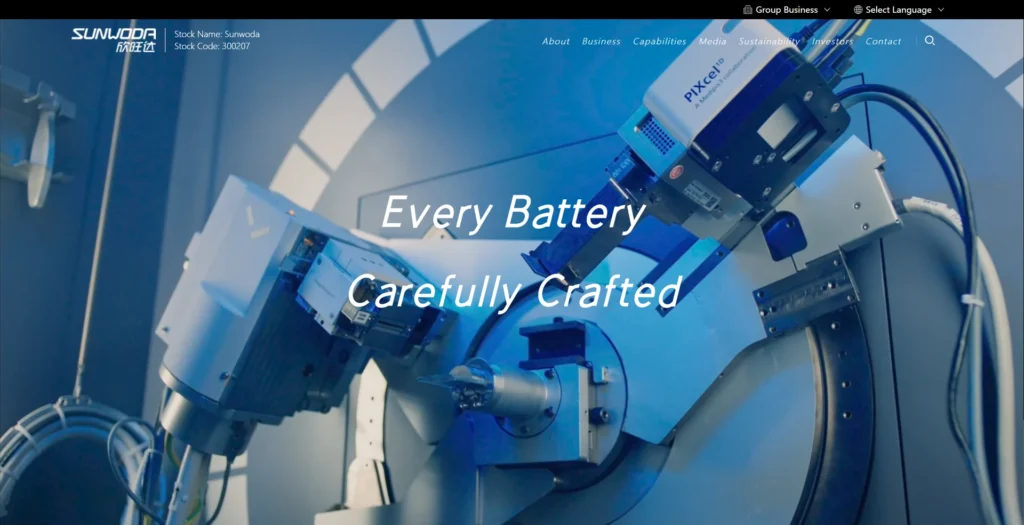
Sunwoda started as a consumer battery maker and still holds more than 30% of the global mobile phone battery market. Its EV battery business is growing quickly: it ranked 11th worldwide with 23.0 GWh from January to September 2026, and its hybrid vehicle battery installations ranked first globally in Q2 2026.
Revenue in the first half of 2026 rose 41% to RMB 38.2 billion. Sunwoda has opened a battery plant in Thailand and is building EV battery production in Hungary.
12. Samsung SDI
- Headquarters: Yongin, South Korea
- Main products: Prismatic and cylindrical EV cells; energy storage systems
- Website: www.samsungsdi.com
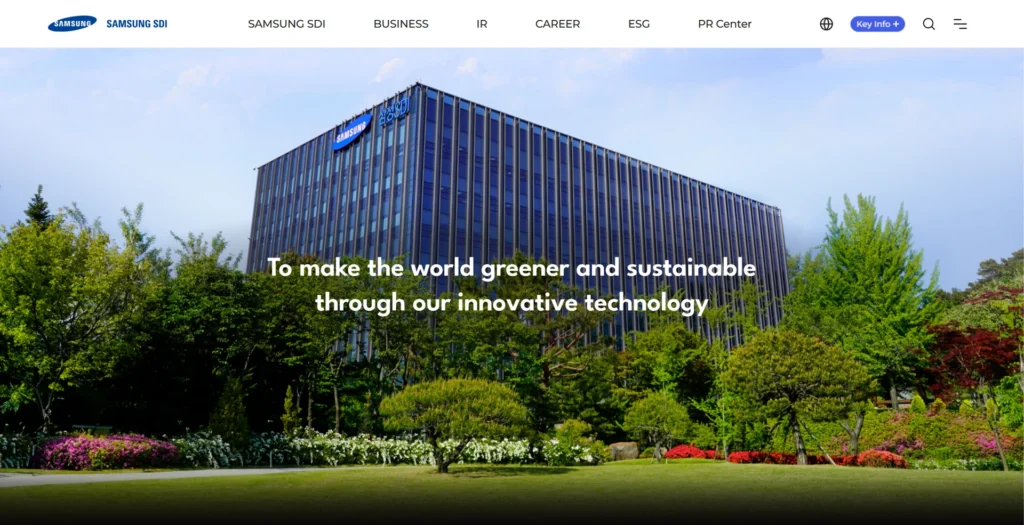
Samsung SDI makes prismatic and cylindrical cells for carmakers including BMW, Stellantis and Rivian, and runs the StarPlus Energy joint venture with Stellantis in Kokomo, Indiana. In 2026 it was not among the 10 largest EV battery suppliers.
The company is moving part of its U.S. capacity to energy storage. Mass production of LFP storage cells at its U.S. plant was scheduled to begin in October 2026, with a target of 30 GWh of U.S. storage cell capacity by the end of the year. Q2 2026 was its first profitable quarter since Q3 2024.
13. Hithium
- Headquarters: Xiamen, Fujian, China
- Main products: LFP cells and systems for energy storage
- Website: www.hithium.com
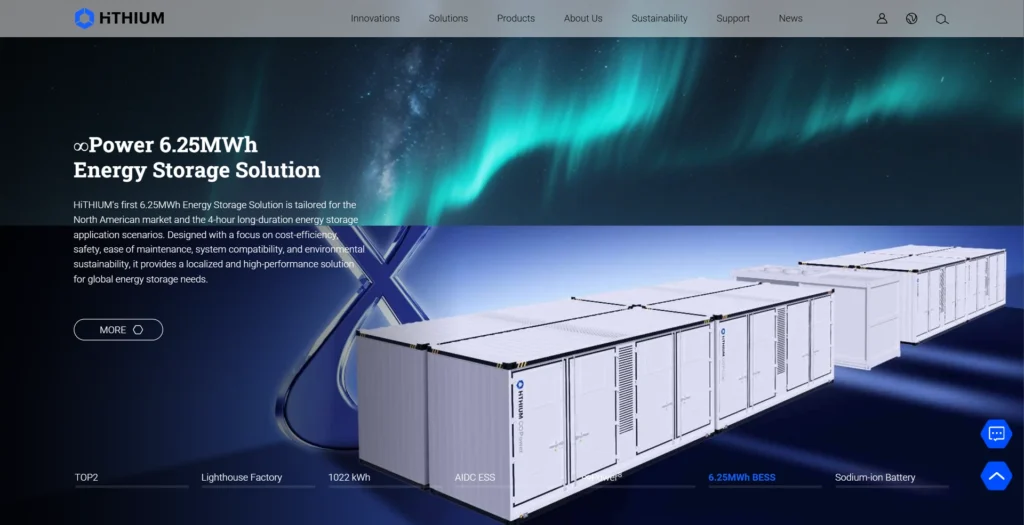
Hithium was founded in 2019 and focuses only on energy storage. By 2025 it had become the second-largest energy storage cell supplier in the world, with about 12% of global shipments, behind only CATL.
Hithium opened a storage system assembly plant in Mesquite, Texas, and shipped its first U.S.-assembled units in August 2025. It has also applied for a listing on the Hong Kong stock exchange.
14. AESC
- Headquarters: Yokohama, Japan
- Main products: EV cells; energy storage cells
- Website: www.aesc-group.com
AESC was founded in 2007 as a joint venture of Nissan and NEC and supplied the batteries for the first Nissan Leaf. Envision Group of China bought the business in 2018, and Nissan kept a minority stake.
AESC has cell plants in Japan, China, the UK (Sunderland) and France (Douai). In the U.S., it paused construction of its South Carolina plant in 2025, and in April 2026 it sold majority control of its Smyrna, Tennessee, plant to Fixx Energy.
15. CORNEX
- Headquarters: Xiaogan, Hubei, China
- Main products: Large-format LFP cells and systems for energy storage
- Website: en.cornexbattery.com
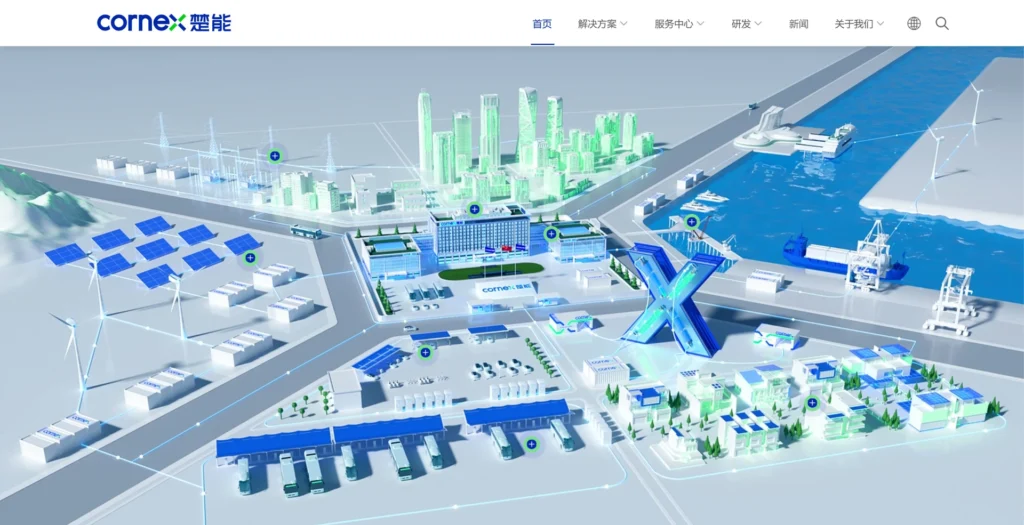
CORNEX was founded in 2021 and within a few years became one of the five largest energy storage cell suppliers in the world in 2025. It specializes in large LFP cells for utility-scale storage, including 588Ah cells.
In early 2026 it signed 11.5 GWh of energy storage orders in Saudi Arabia and Egypt, and it is building a 70 GWh battery base in Hubei province.
Can You Buy Directly from These Manufacturers?
These 15 companies sell cells mainly under large, multi-year contracts with carmakers and energy storage integrators. An OEM that needs a few hundred or a few thousand battery packs a year will usually not buy cells from them directly.
Most OEMs work with a battery pack manufacturer instead. The pack maker buys the cells, designs the BMS and enclosure, and handles testing, certification and shipping.
How to Choose a Lithium-Ion Battery Supplier
- Cells: Which brand and grade? Can they show UN 38.3, IEC 62133 or UL 1642 reports for the exact cell?
- Battery pack certification: Do they have experience with UL 2054, UL 1973 or UL 2271, depending on your application?
- BMS: Is the battery management system designed in-house, and can they adjust protection limits and communication (CAN, RS485, SMBus) for your device?
- Volume fit: What are the MOQ and NRE costs? A gigafactory will not take a 500-unit order; a small assembler may struggle at 50,000.
- Lead time: Ask for separate sample and production lead times, and what happens if a cell supply changes.
- Total delivered cost: For imported battery packs, compare DDP quotes that include freight, duties and dangerous-goods shipping, not just ex-works prices.
For a deeper checklist, see these guides:
Custom Battery Packs from Holo Battery
Holo Battery is a custom lithium battery pack manufacturer. We build LiFePO4 and lithium-ion battery packs for OEMs in the United States and Europe.
- Typical lead times (confirmed per project): 10 to 15 working days for samples; 25 to 30 working days for production runs
- DDP air or sea delivery to the United States and Europe available and confirmed per project
- Grade-A cells with model-specific UN 38.3 Test Summaries and applicable UL or IEC cell files; pack-level UN 38.3, UL or IEC testing arranged per project
- Custom BMS, enclosure and connector design, plus OEM and private label options
Typical applications:
- AGV and mobile robot batteries
- Forklift batteries
- Golf cart and LSV batteries
- Energy storage batteries
- Marine battery packs
- OEM and private label battery packs
Send us your voltage, capacity, size and application, and we will reply with a proposed configuration and project quote (EXW, FOB or DDP as needed).
Contact Holo Battery for a quote | Our battery pack manufacturing services | LiFePO4 pack configurations | Engineering case studies | Certifications and testing | 2027 custom pack cost guide
FAQ
Who is the largest lithium-ion battery manufacturer in the world?
CATL. From January to September 2026 it supplied 39.1% of all EV batteries installed worldwide, more than twice as much as BYD in second place. It was also the largest energy storage cell supplier in 2025.
Which countries make the most lithium-ion batteries?
China, by a wide margin. The seven Chinese companies in the EV top 10 held about 73% of global installations from January to September 2026. South Korea (LG Energy Solution, SK On and Samsung SDI) and Japan (Panasonic and AESC) follow.
What is the difference between EV and energy storage battery rankings?
EV rankings measure batteries installed in electric vehicles. Energy storage rankings measure cells shipped for stationary storage systems. Some companies, such as CATL and BYD, lead in both, while others, such as Hithium and CORNEX, focus almost entirely on energy storage.
Can a small company buy cells directly from CATL or BYD?
Usually only at very large volumes. Most small and mid-size OEMs buy finished battery packs from a pack manufacturer, which sources the cells.
Related Articles: