

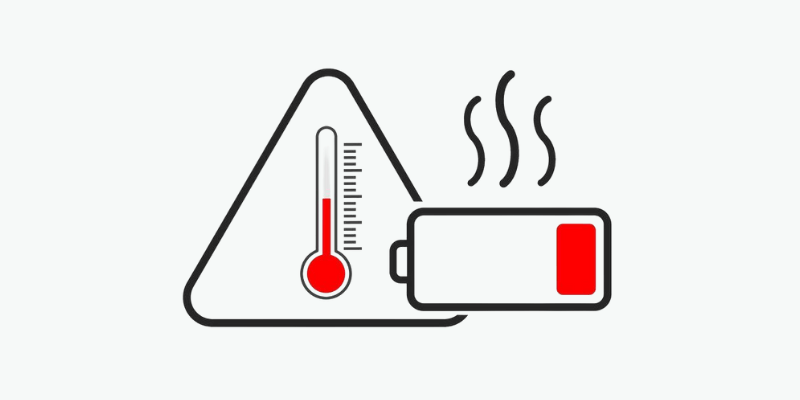
Battery overheating affects device performance, lifespan, and safety. As batteries power devices from smartphones to electric vehicles, understanding the causes and prevention of overheating is essential. This article covers the mechanisms, consequences, and prevention strategies for battery overheating to help users manage batteries effectively.
What is Battery Overheating?
Battery overheating happens when its temperature exceeds the safe operating range. Each battery has an optimal temperature for efficient and safe chemical reactions. Above this limit, reactions become unstable, risking performance loss and safety hazards.
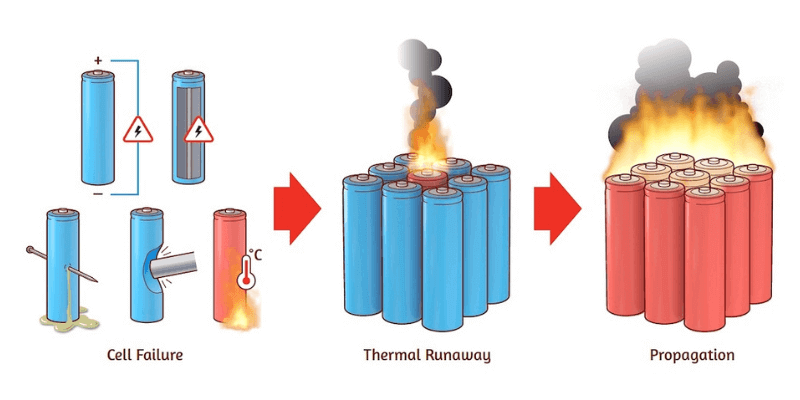
Overheating is dangerous because rising temperatures accelerate chemical reactions, generating more heat and further increasing temperature. This positive feedback loop can quickly escalate if not managed, leading to hazardous conditions.
Consequences of Battery Overheating
Battery overheating affects performance and safety in several ways:
- Performance degradation: High temperatures speed up battery aging, reduce capacity, and shorten runtime. Temperatures above 25°C can cut lithium-ion battery life.
- Thermal Runaway (TR): Overheating can trigger TR, where rising temperatures cause further heat buildup, potentially leading to fires or explosions.
- Physical damage: Prolonged heat can irreversibly damage internal structures, causing swelling, leakage, or deformation and compromising battery integrity.
- Reduced efficiency: Overheated batteries have higher internal resistance, leading to slower charging and shorter usage.
Causes of Battery Overheating
Understanding what triggers overheating is key to prevention. Main causes include:
- Fast charging or overcharging: Charging beyond battery specs generates excessive heat.
- High ambient temperatures: External heat, like sunlight or hot vehicles, limits heat dissipation.
- Poor battery condition or design: Old, damaged, low-quality batteries, or manufacturing defects increase internal resistance and heat.
- Excessive power demands: High currents from demanding tasks (gaming, streaming, power tools) strain the battery.
- Inadequate ventilation: Limited airflow prevents proper cooling.
- Battery Management System (BMS) failure: A faulty BMS can’t regulate temperature or current, allowing unsafe conditions.
Symptoms of Battery Overheating
Decreased Charging or Discharging Efficiency
Recognizing overheating signs allows timely intervention before damage occurs.
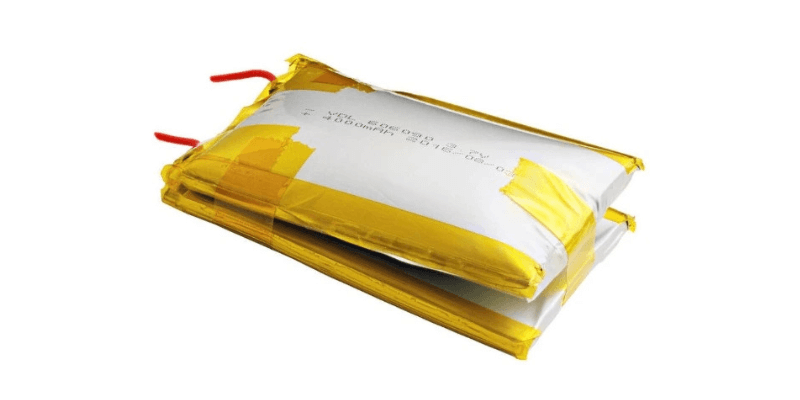
Deformation or Swelling
Overheating increases internal pressure, causing the battery casing to bulge or distort. This indicates serious internal problems and requires immediate attention.
Odor or Smoke
A burning smell or smoke signals internal breakdown or burning. Act immediately, as these often precede dangerous conditions.
Abnormally High Temperature
Excessive heat making batteries uncomfortable to touch clearly indicates overheating and should not be ignored.
Decreased Charging or Discharging Efficiency
Reduced runtime or slow charging suggests overheating has damaged the battery’s chemistry, lowering performance.
Comparing Overheating Symptoms Across Battery Types
| Symptom | Lithium-ion Batteries | Lead-Acid Batteries |
| Temperature Rise | Typically above 60°C (140°F) | Above 50°C (122°F) |
| Physical Changes | Swelling or bulging casing | Corrosion or case swelling |
| Performance Issues | Reduced capacity, faster discharge | Poor performance, reduced runtime |
| Visual Indicators | Hot to touch, discoloration | Leaking electrolyte, bulging |
How to Prevent Battery Overheating
Proactive steps reduce overheating risks:
- Use manufacturer-recommended chargers to prevent voltage mismatches and excess heat.
- Keep devices between 20°C and 25°C (68°F–77°F); avoid direct sunlight and hot vehicles.
- Ensure proper ventilation by maintaining airflow around devices, especially during charging, and cleaning vents regularly.
- Disconnect devices when fully charged and avoid intensive use while charging to minimize heat buildup.
- Use battery management systems that monitor temperature; consider extra sensors for critical applications.
- Regularly inspect batteries for damage, clean terminals, and keep firmware updated for optimal thermal management.
How to Handle Battery Overheating
If overheating occurs, take these steps:
1. Disconnect power immediately to stop heat generation.
2. Move the battery to a non-flammable, well-ventilated area away from combustibles.
3. Let the battery cool naturally at room temperature; avoid rapid cooling like refrigeration.
4. Do not recharge until fully cooled and inspected.
5. Check for swelling, leakage, or damage; do not reuse if damaged.
6. For significant overheating or visible damage, consult a professional.
7. Dispose of damaged batteries according to local regulations; never throw them in regular trash due to safety risks.
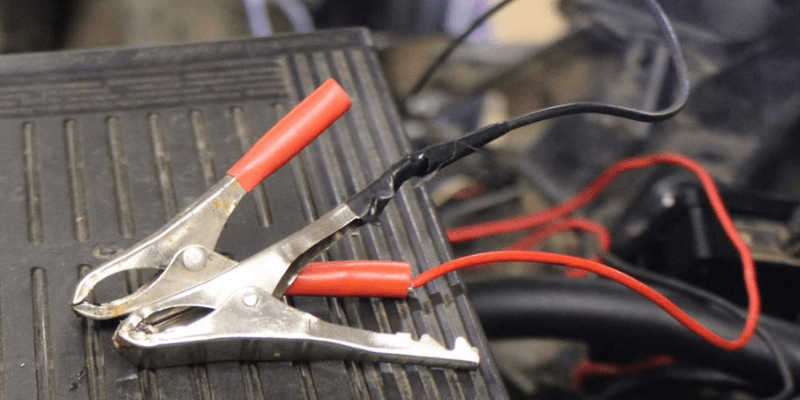
Which Batteries Are More Likely to Overheat?
Not all batteries have the same overheating risks.
18650 cylindrical NCM and LCO lithium-ion batteries are especially sensitive to overheating due to their energy-dense design, particularly under high power or heat.
LFP (Lithium Iron Phosphate) batteries are more thermally stable and less prone to overheating but can still overheat in extreme conditions.
Large-format prismatic batteries, like those in electric vehicles, may also overheat without proper cooling because of their size and energy density.
Why Do Unused Batteries Heat Up?
Batteries can generate heat even when not in use due to:
- Internal chemical reactions: Slow self-discharge produces heat over time.
- Micro-short circuits: Internal faults or degradation cause short circuits and heat.
- High-temperature storage: Heat accelerates self-discharge and buildup.
- Age-related degradation: Older batteries have higher resistance, generating more heat even with little activity.
Do Batteries of Different Sizes Affect Heat Dissipation?
Battery size greatly affects heat dissipation.
Larger batteries dissipate heat less efficiently because the core’s heat has farther to travel, resulting in higher internal temperatures.
Research shows that batteries with larger diameter-to-height (D/H) ratios have lower temperatures and smaller thermal gradients due to increased surface area for better heat dissipation. This explains why large battery packs, like those in electric vehicles, need active cooling systems, while smaller smartphone batteries use passive cooling.
Battery design must consider both heat generation and dissipation to maintain safe temperatures.
Conclusion
Battery overheating is a serious concern. Recognizing its causes and symptoms helps users prevent it and handle batteries safely.
By managing batteries carefully and respecting temperature limits, we can enjoy portable power while minimizing risks.