

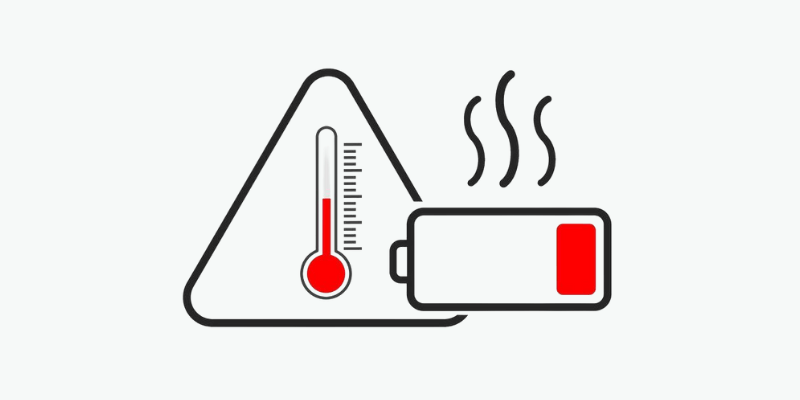
Battery overheating degrades performance, cuts operational lifespan, and creates severe safety hazards. As energy storage systems power commercial electronics and industrial electric mobility, thermal management is an engineering imperative. This guide outlines overheating mechanisms, failure consequences, and preventive protocols.
What is Battery Overheating?
Battery overheating occurs when internal cell temperature exceeds its engineered safe operating range. Above this threshold, electrochemical reactions become unstable, driving rapid capacity degradation.
Overheating is dangerous because rising temperatures accelerate Arrhenius reaction kinetics, generating extra heat and driving internal temperatures higher. This self-reinforcing positive feedback loop can escalate rapidly, shifting stable operation into hazardous thermal breakdown.
Consequences of Battery Overheating
Uncontrolled thermal elevation compromises performance and safety across multiple operational areas:
Operating at high temperatures speeds up aging, permanently reducing cell capacity; sustained heat above 25°C cuts cycle life significantly.
Extreme heat can trigger Thermal Runaway, where accelerating decomposition causes venting, fire, or explosion.
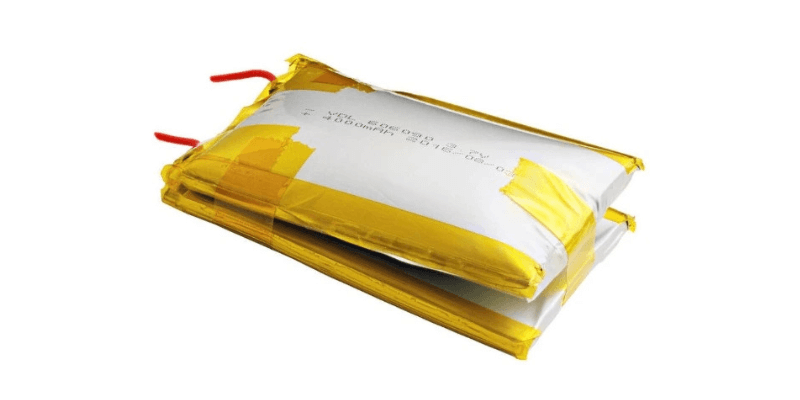
Prolonged thermal stress induces mechanical swelling, internal structural deformation, and corrosive electrolyte leakage.
Overheated cells exhibit elevated internal resistance, lowering energy efficiency and causing sluggish charging intake.
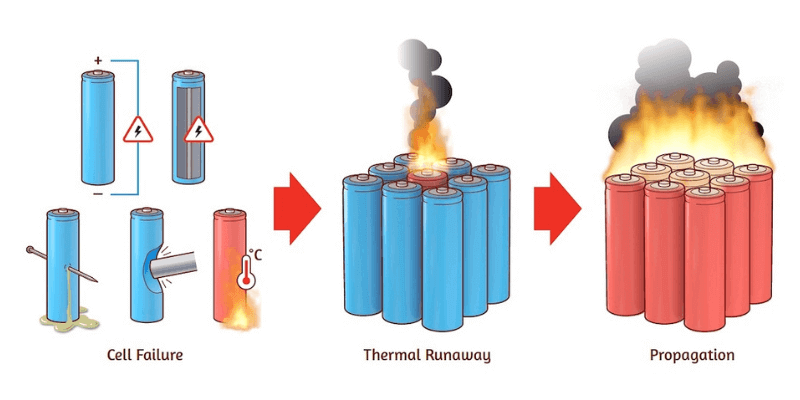
Causes of Battery Overheating
Identifying thermal triggers is essential for prevention:
Fast charging beyond manufacturer specifications or overcharging generates severe resistive Joule heating and lithium plating.
High ambient heat from direct sunlight or confined enclosures severely restricts convective heat dissipation.
Manufacturing defects, internal short circuits, and aging cells elevate internal impedance, producing excess waste heat.
Continuous high-current discharge from heavy motor loads or power tools strains internal connections.
Poor ventilation prevents airflow, while a malfunctioning Battery Management System fails to regulate current or disconnect overtemperature conditions.
Symptoms of Battery Overheating
Decreased Charging or Discharging Efficiency
Recognizing early overheating indicators allows timely intervention before irreversible cell damage occurs.
Deformation or Swelling
Internal pressure buildup causes pouch bloating or can distortion, signaling dangerous decomposition that requires immediate disconnection.
Odor or Smoke
Sweet solvent aromas indicate seal failure, while pungent smoke signals combustion and demands immediate isolation.
Abnormally High Temperature
Casing temperatures exceeding normal operating thresholds and feeling uncomfortably hot to touch confirm severe thermal stress.
Decreased Charging or Discharging Efficiency
Reduced runtime, abrupt voltage drop, and slow charging confirm that thermal stress has damaged active battery chemistry.
Comparing Overheating Symptoms Across Battery Types
| Symptom | Lithium-ion Batteries | Lead-Acid Batteries |
| Temperature Rise | Typically above 60°C (140°F) | Above 50°C (122°F) |
| Physical Changes | Swelling or bulging casing | Corrosion or case swelling |
| Performance Issues | Reduced capacity, faster discharge | Poor performance, reduced runtime |
| Visual Indicators | Hot to touch, discoloration | Leaking electrolyte, bulging |
How to Prevent Battery Overheating
Proactive engineering practices significantly minimize thermal risks:
Deploy regulated CC-CV chargers matching manufacturer voltage curves to prevent overcharging.
Maintain ambient temperatures between 20°C and 25°C (68°F–77°F), avoiding direct solar radiation and hot storage compartments.
Ensure adequate enclosure airflow, clean ventilation pathways, and inspect cooling channels regularly.
Avoid intensive high-load operation while charging, and disconnect packs once full charge saturation is achieved.
Integrate digital battery management systems with calibrated thermistors to execute automated overtemperature shutoffs.
Inspect terminals regularly for corrosion and maintain firmware to optimize thermal protection parameters.
How to Handle Battery Overheating
If a battery exhibits thermal distress, execute this emergency procedure:
1. Disconnect input charging power and external load circuits immediately to halt heat generation.
2. Move the battery to a non-combustible, well-ventilated area away from flammable materials.
3. Allow the pack to cool naturally at room temperature without rapid refrigeration.
4. Do not attempt recharging until the pack has completely cooled and passed inspection.
5. Inspect for casing swelling, seal rupture, or electrolyte leakage; retire any compromised unit.
6. Consult qualified battery engineers if heating persists without an active electrical load.
7. Dispose of damaged cells through certified hazardous waste recyclers in compliance with environmental laws.
Which Batteries Are More Likely to Overheat?
Thermal vulnerability depends heavily on cell chemistry and format.
High-energy cylindrical NMC and LCO lithium-ion batteries are particularly susceptible to overheating under high power demands due to dense active materials.
In contrast, LFP (Lithium Iron Phosphate) batteries offer superior thermal stability, resisting decomposition up to 270°C and rarely overheating under normal operation.
Large-format prismatic cells also risk localized hot spots if packaging lacks adequate inter-cell thermal conduction.
Why Do Unused Batteries Heat Up?
Batteries can generate heat in open-circuit storage due to several internal degradation mechanisms:
Internal parasitic chemical reactions cause continuous self-discharge that releases thermal energy over time.
Microscopic internal short circuits from dendrites or damaged separators bridge electrodes and generate localized heat.
High storage temperatures accelerate chemical breakdown, while aged cells with elevated impedance generate spontaneous exothermic reactions.
Do Batteries of Different Sizes Affect Heat Dissipation?
Cell geometry significantly influences thermal dissipation capabilities.
Larger batteries dissipate heat less effectively because core heat travels farther to reach exterior surfaces, creating elevated internal thermal gradients.
Research shows that cells with larger diameter-to-height (D/H) ratios maintain lower temperatures and smaller gradients due to greater relative surface area. This thermodynamic principle explains why heavy EV battery packs require liquid cooling plates, while smaller electronics rely on passive cooling.
Pack engineering must balance volumetric heat generation against cooling surface area to ensure safe thermal equilibrium.
Conclusion
Battery overheating represents a serious operational hazard that degrades performance, reduces cycle life, and threatens system safety.
By identifying thermal triggers, maintaining optimal ambient environments, and deploying robust BMS controls, operators can maximize power reliability while preventing hazardous thermal incidents.