

Lithium batterijen voedt het merendeel van de draagbare elektronica, industriële apparatuur en elektrische voertuigen die vandaag de dag worden gebruikt.
Maar het veilig vervoeren ervan is een gereguleerd proces.
Onjuiste omgang met lithiumbatterijen tijdens transport is een belangrijke oorzaak van brandincidenten in de luchtvaart. Daarom vereisen internationale toezichthouders dat alle lithiumbatterijen voldoen aan de UN 38.3-norm voordat ze per vliegtuig, over de weg of per spoor kunnen worden vervoerd.
In deze gids wordt uitgelegd wat UN 38.3 vereist, wat elke test inhoudt en wat de resultaten betekenen voor de batterijen die u aanschaft of verzendt.
What is UN 38.3?
UN 38.3 is het internationale transport veiligheid standaard voor lithiumbatterijen, gepubliceerd door de Verenigde Naties als onderdeel van de Manual of Tests and Criteria.
Het is van toepassing op alle typen lithiumbatterijen, inclusief lithium-ion, lithium-polymeer en lithium-ijzerfosfaat, ongeacht het celformaat of de capaciteit.
Elke lithiumbatterij die commercieel wordt vervoerd, moet vóór verzending alle acht UN 38.3-tests hebben doorstaan.
Dit geldt ongeacht of de batterij alleen wordt verzonden, is verpakt met apparatuur of in een apparaat is geïnstalleerd.
The 8 UN 38.3 tests
Test 1: altitude simulation
Wat het test:Prestaties onder extreme lagedrukomstandigheden vertegenwoordigen een conservatief worstcase-transportscenario.
De testconditie van 11,6 kPa simuleert de druk op ongeveer 15.000 meter hoogte.
This does not represent the typical conditions inside a commercial passenger aircraft cargo hold, which is pressurised to an equivalent altitude of around 2,400 metres.
De voorwaarde van 11,6 kPa is een opzettelijk conservatieve standaard die is ontworpen om drukloze vrachtruimen en extreme of noodscenario's te simuleren, en niet om routinematige vluchtomstandigheden voor passagiers.
Deze lagedrukomgeving kan ervoor zorgen dat de batterijbehuizingen uitzetten, afdichtingen defect raken en... elektrolyt lekken.
Testomstandigheden:
| Parameter | Specificatie |
| Druk | 11,6 kPa |
| Duur | 6 uur |
| Temperatuur | Omgeving |
Passcriteria:
- Geen massaverlies
- Overdrukventiel blijft gesloten
- Geen scheuren of lekkages in de batterijbehuizing
- De spanning blijft binnen 10% van de initiële waarde

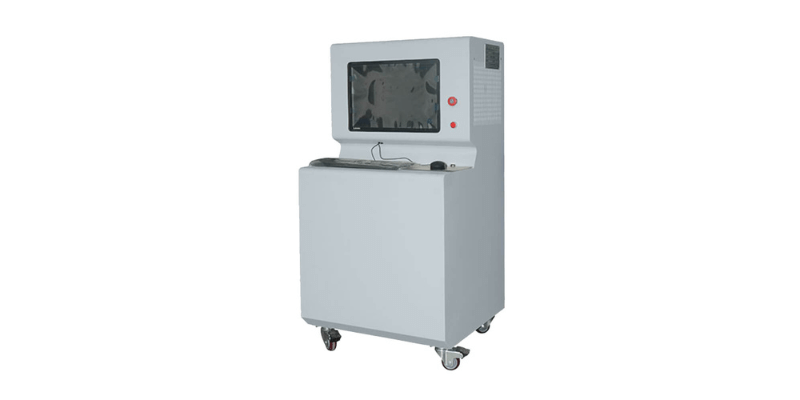
Test 2: thermal test
Wat het test:Prestaties en structurele integriteit over extreme temperatuurbereiken.
Extreme temperaturen tijdens transport leggen aanzienlijke druk op de batterijafdichtingen en interne elektrische verbindingen.
Dit omvat warme asfaltomgevingen op de grond en koude vrachtruimen op grote hoogte tijdens de vlucht.
Testomstandigheden:
| Parameter | Specificatie |
| Hoge temperatuur | 72°C gedurende minimaal 6 uur |
| Lage temperatuur | -40°C gedurende minimaal 6 uur |
| Overgangstijd | Maximaal 30 minuten tussen extreme temperaturen |
| Aantal cycli | 10 cycli |
| Rustperiode | 24 uur bij omgevingstemperatuur tussen 20°C en 30°C na de laatste cyclus |
De maximale overgangstijd van 30 minuten tussen extreme temperaturen is een specifieke eis van de norm.
Testlaboratoria moeten aantonen dat aan dit overgangspercentage wordt voldaan.
Passcriteria:
Hetzelfde als hoogtesimulatie. Geen massaverlies, geen scheuren of lekkages, overdrukklep gesloten, spanning binnen 10% van de beginwaarde.
Test 3: vibration test
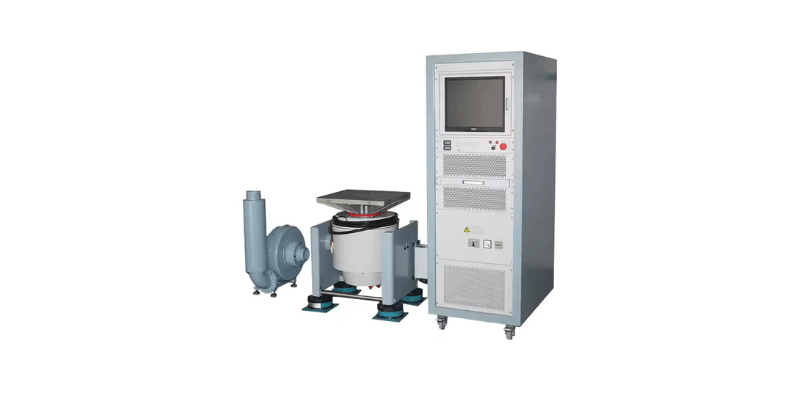
What it tests: Resistance to mechanical stress from vibration during ground transport.
Het weg- en spoorvervoer onderwerpt batterijen gedurende een reis aan voortdurende trillingen over een reeks frequenties.
Testomstandigheden:
| Parameter | Specificatie |
| Frequentiebereik | 7 Hz tot 200 Hz |
| Sweep-snelheid | 1 octaaf per minuut |
| Duur | Totaal 3 uur |
| Bijlen | Drie onderling loodrechte assen |
Het sinusoïdale zwaaiprofiel bij 1 octaaf per minuut is in de norm gespecificeerd om de trillingsfrequentieverdeling te reproduceren die wordt ervaren tijdens weg- en spoorvervoer.
Passcriteria:
Hetzelfde als hoogtesimulatie.
Test 4: impact test
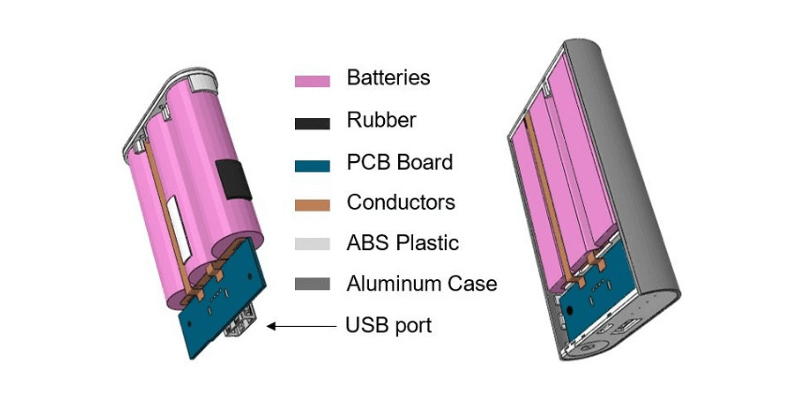
What it tests: Structural integrity under sudden mechanical shock.
Batterijen die onderweg zijn, zijn onderhevig aan plotselinge schokken als gevolg van vallen, handlingapparatuur en botsingen met voertuigen.
De uitgeoefende kracht wordt bepaald door de totale massa van de cel of batterij, niet door de vraag of het een cel of een samengesteld pakket is.
Testomstandigheden:
| Massa van cel of batterij | Forceer profiel |
| 12 kg of minder | 150 Gn gedurende 6 milliseconden |
| Ruim 12 kg | 50 Gn gedurende 11 milliseconden |
Dit onderscheid wordt vaak verkeerd begrepen.
Een grote prismatische cel van meer dan 12 kg wordt getest op 50 Gn, terwijl een klein batterijpakket van minder dan 12 kg wordt getest op 150 Gn.
De bepalende factor is de massa, niet of het artikel een cel of een samengesteld pakket is.
Passcriteria:
- Geen vuur
- Geen explosie
- Geen lekkage
- Geen ontluchting
- Spanning binnen 10% van de waarde vóór de test
Test 5: external short circuit test
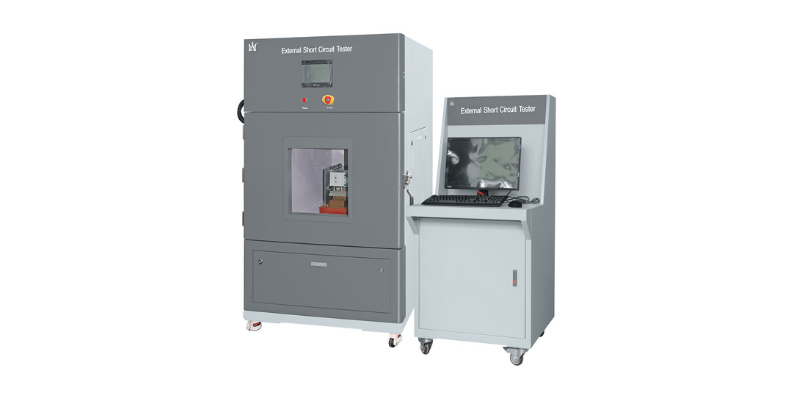
What it tests: Response to an external short circuit at elevated temperature.
Een externe kortsluiting is een van de meest voorkomende oorzaken van batterijstoring tijdens transport.
Deze test evalueert of de batterij bestand is tegen kortsluiting zonder gevaarlijke temperaturen te bereiken of een veiligheidsgebeurtenis te veroorzaken.
De temperatuur vóór de test is afhankelijk van de cel- of batterijgrootte.
Dit is een belangrijk onderscheid dat van invloed is op de manier waarop de test wordt uitgevoerd voor verschillende producttypen.
Testomstandigheden:
| Cel- of batterijgrootte | Temperatuur vooraf testen |
| Grote cel of grote batterij | 57°C ± 4°C |
| Kleine cel of kleine batterij | 25°C ± 2°C |
Onder UN 38.3 is het onderscheid in grootte voornamelijk gebaseerd op massa: grote cellen worden over het algemeen gedefinieerd als meer dan 500 g, en grote batterijen als meer dan 12 kg.
Het in de industrie vaak aangehaalde getal van 20 Ah komt overeen met de IATA DGR-drempel voor PI 965/966 Sectie II en komt ongeveer overeen met de UN 38.3-massadrempel voor grote cellen voor typische lithium-ionformaten, maar de 20 Ah-waarde zelf is eerder een IATA DGR-referentiepunt dan een UN 38.3-definitie.
Als u niet zeker weet of uw product onder UN 38.3 als groot of klein kwalificeert, bevestig dit dan op basis van massa bij uw testlaboratorium in plaats van alleen op de Ah-capaciteit te vertrouwen.
Kleine cellen, inclusief gangbare consumentenformaten zoals 18650 cilindrische cellen en buidelcellen in het bereik van 5 tot 10 Ah, worden doorgaans getest bij 25 °C ± 2 °C, niet bij 57 °C.
Het toepassen van de verkeerde temperatuurconditie tijdens het testen is een nalevingsfout.
Als u kleine cellen of batterijen certificeert, bevestig dan bij uw testlaboratorium welke temperatuuromstandigheden van toepassing zijn op uw specifieke product voordat u verdergaat.
| Parameter | Specificatie |
| Externe weerstand toegepast | 20 mΩ of minder |
| Monitoringperiode | 6 uur na kortsluiting |
Passcriteria:
- De batterijtemperatuur mag tijdens de test niet hoger zijn dan 170 °C
- Geen brand of explosie tijdens de monitoringperiode van 6 uur
- Geen breuk of lekkage van de batterijbehuizing tijdens de monitoringperiode
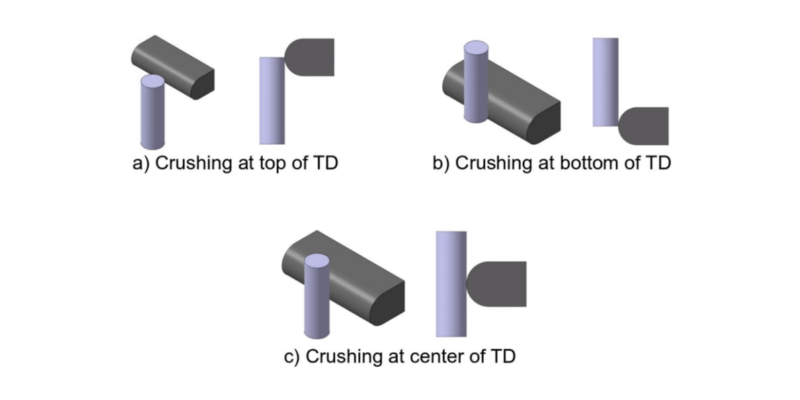
Test 6: crush test
What it tests: Cell response to physical deformation simulating crash damage.
Deze test geldt alleen voor individuele cellen, niet voor gemonteerde accupakketten.
Het simuleert de structurele schade die een cel kan ondervinden bij een voertuigbotsing of ernstige verbrijzeling, waardoor opzettelijk een interne kortsluiting in de cel wordt veroorzaakt.
Testomstandigheden:
De crush-methode is afhankelijk van het celformaat:
| Celformaat | Crush-methode |
| Cilindrische cellen met een diameter van 18 mm of groter | Er viel 9,1 kg staaf van 61 cm op de cel |
| Prismatische cellen en buidelcellen | 13 kN kracht uitgeoefend via een vlakke plaat |
| Cilindrische cellen met een diameter van minder dan 18 mm | 13 kN kracht uitgeoefend via een vlakke plaat |
Opmerking over de valimpactmethode:
De staaf van 9,1 kg die vanaf 61 cm valt, is de T.6-impactmethode binnen UN 38.3 zelf.
Het is specifiek van toepassing op cilindrische cellen met een diameter van 18 mm of groter.
Naar deze methode wordt ook verwezen in de UL 1642- en UL 2054-certificering, en daarom wordt deze soms vooral geassocieerd met Noord-Amerikaanse normen.
Voor UN 38.3 T.6 verbrijzelingstests van prismatische cellen en buidelcellen gebruiken laboratoria bijna universeel hydraulische persapparatuur die 13 kN toepast via een vlakke plaat in plaats van de valmethode.
Als uw product een prismatische of buidelcel is, kunt u ervan uitgaan dat de hydraulische crush-methode wordt gebruikt voor T.6-tests.
Passcriteria:
- De celtemperatuur mag binnen 6 uur na de test niet hoger zijn dan 170°C
- Geen brand of explosie binnen 6 uur na de test
| Botsingtest | Crush -test | |
| Geldt voor | Alle batterijen en cellen | Alleen cellen |
| Forceer profiel | Massaafhankelijk, zie Test 4 | Formaatafhankelijk, zie hierboven |
| Belangrijke statistiek | Spanning binnen 10% van de waarde vóór de test | Temperatuur lager dan 170°C, geen brand |
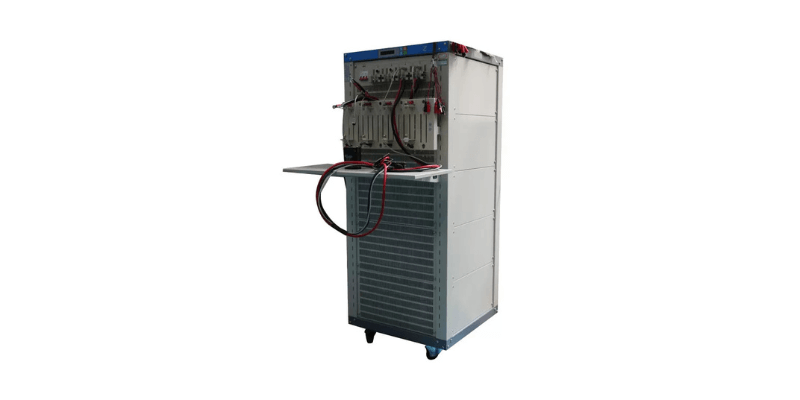
Test 7: overcharge test
What it tests: Safety under sustained overcharging conditions.
Overladen is een primaire oorzaak van thermische overbelasting bij lithiumbatterijen.
Belangrijke opmerking over toepasbaarheid:
De vereisten voor de overbelastingstest verschillen tussen cellen en batterijpakketten.
Individuele cellen moeten de volledige overbelastingstest voltooien, zoals hieronder beschreven.
Voor geassembleerde accupakketten voorzien van een accumanagementsysteem kunnen de geldende eisen afwijken.
Pakketten met een BMS kunnen worden onderworpen aan een beoordeling van overbelasting op systeemniveau in plaats van aan de volledige 2x stroom- en spanningstest die wordt toegepast op kale cellen.
Als u een batterijpakket met geïntegreerd BMS certificeert, bevestig dan de toepasselijke testprocedure bij uw testlaboratorium voordat u verdergaat.
Testomstandigheden voor cellen:
| Parameter | Specificatie |
| Laadstroom | Tweemaal de maximale nominale laadstroom |
| Laad spanning | Tweemaal de maximale nominale laadstroom |
| Duur | 24 uur continu |
| Monitoringperiode | 7 dagen na overbelastingstest |
Zowel de stroom- als de spanningslimieten worden tijdens deze test verdubbeld, waardoor zowel de stroomverwerking als de spanningsbeveiligingsmogelijkheden van de cel tegelijkertijd worden benadrukt.
Passcriteria:
- Geen brand of explosie tijdens de overlaadperiode van 24 uur
- Geen brand of explosie tijdens de monitoringperiode van 7 dagen
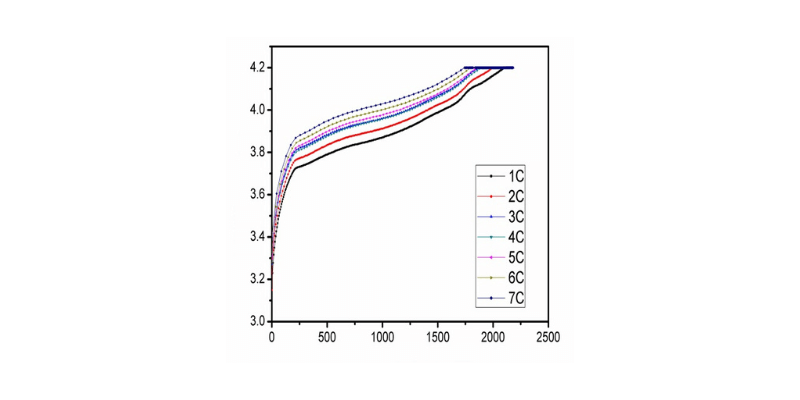
Test 8: forced discharge test
What it tests: Cell safety under forced over-discharge conditions.
Deze test is alleen van toepassing op individuele cellen.
Het evalueert de respons van een cel wanneer deze wordt ontladen boven de minimale nominale spanning, en simuleert een scenario waarin een zwakkere cel in een seriereeks in spanningsomkering wordt gedreven doordat sterkere cellen blijven ontladen.
Testomstandigheden:
| Parameter | Specificatie |
| Ontlaadstroom | Maximale ontlaadstroom gespecificeerd door de fabrikant |
| Duur | Nominale capaciteit (Ah) gedeeld door de ontlaadstroom, waardoor de cel naar 0V wordt gedwongen en in omkering wordt gebracht |
| Monitoringperiode | 6 uur na de test |
Passcriteria:
- Geen brand of explosie tijdens of na de test
All 8 tests at a glance
| Test | Geldt voor | Sleutelconditie | Passeercriteria |
| Hoogte simulatie | Alle batterijen | 11,6 kPa gedurende 6 uur, extreem scenario | Geen lekkage, spanning binnen 10% |
| Thermische test | Alle batterijen | 72°C tot -40°C, 10 cycli, max. 30 min. overgang | Geen lekkage, spanning binnen 10% |
| Trillingstest | Alle batterijen | 7 tot 200 Hz, 1 octaaf per minuut, 3 uur | Geen lekkage, spanning binnen 10% |
| Impacttest | Alle batterijen | 150 Gn indien 12 kg of minder, 50 Gn indien meer dan 12 kg | Geen brand, spanning binnen 10% |
| Externe kortsluiting | Alle batterijen | 57°C groot, 25°C klein, 6 uur bewaakt | Temperatuur lager dan 170°C, geen brand |
| Crush-test | Alleen cellen | Dalend of hydraulisch, formaatafhankelijk | Temperatuur lager dan 170°C, geen brand |
| Overbelastingstest | Cellen vereist, pakketten onderworpen aan BMS-beoordeling | 2x stroom en spanning gedurende 24 uur | Geen brand of explosie |
| Geforceerde ontladingstest | Alleen cellen | Maximale stroom-naar-spanningsomkering | Geen brand of explosie |
Complete documentation required for lithium battery shipment
Het behalen van de UN 38.3-tests is slechts een onderdeel van het legaal verzenden van lithiumbatterijen.
Voor een volledige verzending van een lithiumbatterij zijn doorgaans drie afzonderlijke documenten vereist.
Het is belangrijk om te begrijpen dat alleen het UN 38.3-testrapport deel uitmaakt van de UN 38.3-norm zelf.
De andere twee documenten ondersteunen de nalevingsdocumenten die door vervoerders en toezichthouders worden vereist onder afzonderlijke regelgevingskaders, met name IATA DGR voor luchtvracht en IMDG Code voor zeevracht.
Document 1: UN 38.3 test report
Het UN 38.3-testrapport bevestigt dat de batterij alle acht tests die in deze handleiding worden beschreven, heeft doorstaan.
Geldigheid: Lange termijn, geen vaste vervaldatum.
Het testrapport blijft geldig zolang:
- De chemie en materialen van de batterijcellen zijn niet veranderd
- De celafmetingen en capaciteit zijn niet veranderd
- Het ontwerp en de configuratie van het batterijpakket zijn niet veranderd
- De productielocatie en het proces zijn niet veranderd
- De toepasselijke regelgeving is niet zodanig herzien dat hertesten noodzakelijk is
Elke wijziging in het bovenstaande vereist een herbeoordeling en in de meeste gevallen een nieuwe test voordat de verzending kan worden voortgezet.
Document 2: air and sea cargo transport condition appraisal report
Dit document wordt uitgegeven door geaccrediteerde beoordelingsinstanties voor gevaarlijke goederen en certificeert dat het specifieke batterijproduct voldoet aan de transportvoorwaarden vereist onder IATA DGR voor luchtvracht en IMDG Code voor zeevracht.
In China wordt dit document gewoonlijk uitgegeven door geaccrediteerde instellingen en wordt het ook wel het lucht- of zeevrachtvervoersconditie-identificatierapport genoemd.
Dit document maakt geen deel uit van de UN 38.3-norm zelf.
Het is een vervoerder en wettelijke vereiste die is uitgegeven onder de IATA DGR- en IMDG-frameworks.
Geldigheid: één kalenderjaar, eindigend op 31 december van het jaar van uitgifte.
Dit document moet jaarlijks worden vernieuwd, ongeacht of het batterijontwerp of het UN 38.3-testrapport is gewijzigd.
Voor teams die de reguliere zendingen van lithiumbatterijen beheren, is het inbouwen van deze jaarlijkse vernieuwing in de logistieke planning essentieel om vertragingen bij de verzending aan het begin van elk nieuw jaar te voorkomen.
Document 3: MSDS / SDS (material safety data sheet)
Het MSDS, ook wel het veiligheidsinformatieblad genoemd onder GHS-terminologie, biedt informatie over de chemische samenstelling, hantering, opslag en noodmaatregelen voor de batterij.
Geldigheid: Jaarlijkse verlenging is de standaardpraktijk in de sector voor exportzendingen van lithiumbatterijen.
Opgemerkt moet worden dat het GHS-systeem zelf geen universele vaste geldigheidsduur voor SDS-documenten wereldwijd specificeert.
De vereiste om te updaten wordt formeel geactiveerd door wijzigingen in de chemie, formulering of toepasselijke regelgeving van de batterij.
In de praktijk is voor de export van lithiumbatterijen de jaarlijkse vernieuwing van het veiligheidsinformatieblad de gevestigde industriestandaard, die wordt verwacht door vervoerders en douaneautoriteiten.
Document validity summary
| Document | Onderdeel van VN 38.3 | Geldigheid | Vernieuwingstrigger |
| VN 38.3 testrapport | Ja | Lange termijn, geen vaste vervaldatum | Wijziging van het batterijontwerp of herziening van de regelgeving |
| Beoordeling van de toestand van het lucht- en zeevrachtvervoer | Nee, IATA DGR- en IMDG-vereiste | 1 kalenderjaar, eindigend op 31 december | Jaarlijkse verlenging vereist |
| MSDS/VIB | Nee, GHS- en vervoerdersvereiste | Jaarlijkse verlenging per branchepraktijk | Jaarlijks of bij veranderingen in de chemie of de regelgeving |
IATA DGR packaging instructions
Bij verzending van lithiumbatterijen per vliegtuig is de toepasselijke IATA DGR-verpakkingsinstructie afhankelijk van de manier waarop de batterij wordt verzonden.
Houd er rekening mee dat PI 965, 966 en 967 IATA DGR-verpakkingsinstructies zijn en geen UN-nummers.
De UN-nummers voor lithium-ionbatterijen zijn UN 3480 voor lithium-ionbatterijen die afzonderlijk worden verzonden en UN 3481 voor lithium-ionbatterijen die zijn verpakt met of zich bevinden in apparatuur.
| HIER IS DGR PI | Beschrijving |
| PI 965 | Lithium-ionbatterijen worden afzonderlijk verzonden, niet met of in apparatuur |
| PI 966 | Lithium-ionbatterijen die bij de apparatuur zijn geleverd, maar nog niet zijn geïnstalleerd |
| PI 967 | Lithium-ionbatterijen geïnstalleerd in apparatuur |
Elke verpakkingsinstructie heeft specifieke vereisten voor de laadstatus, verpakking, etikettering en hoeveelheidslimieten.
Verzendingen moeten voldoen aan de huidige IATA DGR-editie, die jaarlijks wordt bijgewerkt.
FAQ
Is UN 38.3 van toepassing op alle chemische samenstellingen van lithiumbatterijen?
Ja. De richtlijn is van toepassing op lithium-metaal- en lithium-ionbatterijen, waaronder Li-ion, lithium-polymeer en LiFePO4, wanneer deze commercieel worden vervoerd.
Hoe lang is een UN 38.3 testrapport geldig?
Er is geen vaste vervaldatum. Het blijft geldig tenzij het ontwerp, de chemie of het productieproces van de batterij verandert, of de regelgeving opnieuw testen vereist. Andere verzenddocumenten, zoals MSDS en transportbeoordelingsrapporten, moeten mogelijk regelmatig worden vernieuwd.
Gebruikt de externe kortsluittest altijd 57°C?
Nee. Grote cellen van meer dan 500 g en grote batterijen van meer dan 12 kg worden getest bij 57°C ± 4°C. Kleinere cellen en batterijen worden getest bij 25°C ± 2°C.
Geldt de overlaadtest voor alle accupakketten?
Niet altijd. UN 38.3 T.7 is van toepassing op oplaadbare batterijen, terwijl de exacte procedure kan variëren voor pakketten met beveiligingscircuits of BMS. Bevestig dit bij het testlaboratorium.
Wat is het verschil tussen IATA DGR PI 965, 966 en 967?
PI 965 is bedoeld voor lithium-ionbatterijen die alleen worden verzonden. PI 966 is voor batterijen verpakt met apparatuur. PI 967 is voor batterijen die in apparatuur zijn geïnstalleerd. UN 3480 is alleen van toepassing op batterijen, en UN 3481 is van toepassing op batterijen in of in apparatuur.