

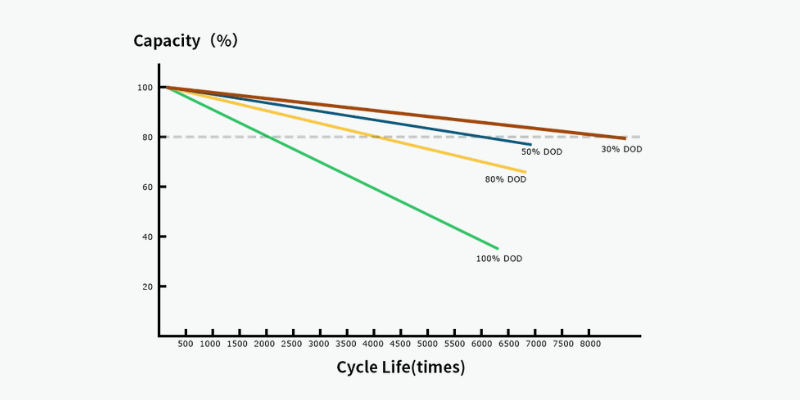
Los compradores industriales suelen tratar “recuento de ciclos" como el principal predictor de longevidad. En implementaciones reales, el tiempo de inactividad de la batería y las fallas de campo se deben con mayor frecuencia a la pérdida de energía utilizable y especialmente a la pérdida de capacidad de energía (por ejemplo, caída de voltaje y disparos de BMS), junto con el envejecimiento del calendario debido al tiempo en SOC/temperatura elevada.
A continuación se detallan las preguntas de ingeniería que utilizamos para evaluar el riesgo del ciclo de vida, independientemente de si su batería es LFP o NMC.
Pregunta 1: ¿Qué define el final de vida de una batería industrial?
El fin de vida útil (EOL) debe definirse mediante restricciones funcionales a nivel del sistema, normalmente utilizando uno o más de los siguientes criterios:
- SOH/umbral de capacidad: la capacidad cae por debajo del nivel necesario para el tiempo de ejecución o el rendimiento requerido.
- Umbral de capacidad de potencia (impulsado por la impedancia): el aumento de la resistencia interna (crecimiento de DCIR/DCR) provoca una caída de voltaje inaceptable o un déficit de potencia máxima bajo su perfil de carga.
- Restricciones de protección y fiabilidad: el paquete activa cada vez más los límites BMS (corriente de carga/descarga/tensión/temperatura) o no cumple con los márgenes de seguridad operativa.
Acerca de la “duplicación de DCR”: el crecimiento de la impedancia a menudo se correlaciona con la degradación de la energía, pero “duplicación de DCR = falla” no es universal. Que se vuelva crítico depende de:
- corriente máxima y ancho de pulso
- Arquitectura en serie/paralelo y pérdidas de interconexión.
- ventana de voltaje permitido y comportamiento de control del sistema
Práctica de ingeniería: establezca el EOL utilizando un requisito basado en la capacidad y uno basado en la energía, luego valídelo con su ciclo de trabajo.
Pregunta 2: ¿Cómo afecta la profundidad de descarga al ciclo de vida?
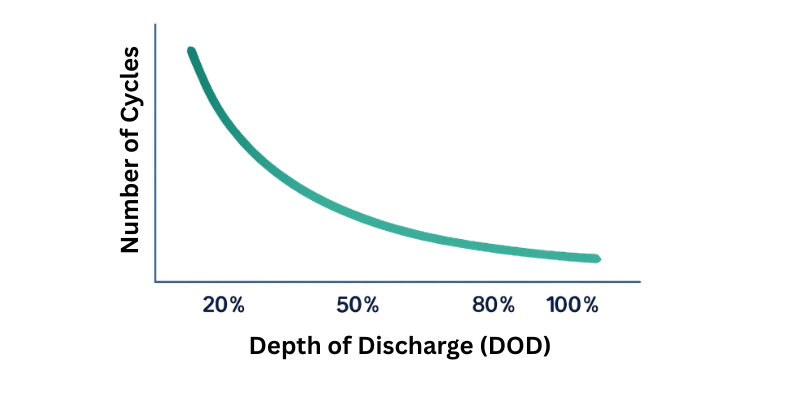
La profundidad de descarga (DoD) es una palanca principal para el envejecimiento del ciclo porque cada ciclo genera cambios repetidos en la química de los electrodos y las capas interfaciales. En general:
- DoD más profundo → mayor estrés por ciclo → degradación más rápida
- Ventanas de SOC más estrictas (cuando sean compatibles con el perfil de su misión) → degradación más lenta
Para el diseño industrial, el objetivo no es perseguir un número máximo de ciclos, sino maximizar la energía útil durante su vida útil bajo:
- su rendimiento diario
- entrega de potencia máxima requerida
- limitaciones de temperatura
Punto clave: la “mejor estrategia del Departamento de Defensa” difiere entre LFP y NMC dependiendo de su protocolo de carga y de la sensibilidad al envejecimiento del calendario.
Pregunta 3: ¿La carga rápida degrada gravemente las celdas de litio?
La carga rápida acelera la degradación cuando empuja la celda a condiciones que aumentan las reacciones secundarias y/o desencadenan el riesgo de revestimiento de litio. Los principales impulsores son:
- Carga térmica: una corriente más alta aumenta la generación de calor (I²R) y el aumento de temperatura acelera los mecanismos de envejecimiento.
- Crecimiento de la interfase: las condiciones de carga agresivas pueden espesar las capas de la interfase, aumentando la impedancia y reduciendo la capacidad de energía con el tiempo.
- Riesgo de revestimiento de litio (crítico): el riesgo de revestimiento aumenta a bajas temperaturas y también cerca de un SOC alto, especialmente cuando la corriente de carga no está limitada por el protocolo de carga validado por el proveedor.
El revestimiento de litio es el verdadero "acelerador de fallas de carga rápida". Su inicio no es una temperatura única fija en todas las células. Depende en gran medida de:
- química de la celda y diseño del ánodo (LFP vs NMC impactan diferentes aspectos del comportamiento)
- SOC al inicio de la carga rápida
- Caja/límites actuales y estrategia de transición CC/CV
- uniformidad de temperatura en el paquete
Recomendación de ingeniería (LFP & Ambos NMC aplican):
- implementar límites de corriente de carga sensibles a la temperatura
- agregue preacondicionamiento (precalentamiento/preacondicionamiento) cuando opere en ambientes fríos
- cumplir estrictamente con los perfiles de carga rápida validados por el proveedor y las protecciones de carga BMS
Pregunta 4: ¿Qué causa el envejecimiento del calendario cuando la batería permanece inactiva?
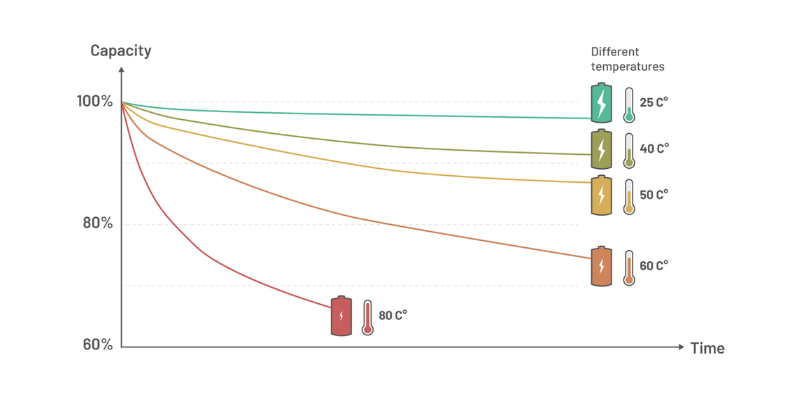
El envejecimiento calendario es una degradación que se produce incluso sin ciclos, impulsada por reacciones químicas en curso en las interfaces electrodo/electrolito. Generalmente se acelera por:
- temperatura más alta
- SOC promedio más alto (tiempo pasado cerca de condiciones de alto voltaje)
- largos tiempos de permanencia en SOC elevado
- paquete de falta de uniformidad térmica (puntos calientes)
Desde una perspectiva de adquisición e integración, la pregunta es: ¿su régimen de almacenamiento/inactividad coincide con los supuestos de SOC/temperatura utilizados en los datos del ciclo de vida proporcionados por el proveedor de la celda?
Recomendación de ingeniería para repuestos y activos inactivos:
- almacene de acuerdo con la guía del proveedor para la ventana SOC y la temperatura
- Evite dejar paquetes en condiciones extremas de carga completa durante períodos prolongados a menos que estén validados explícitamente para su diseño exacto de celda y paquete.
Pregunta 5: ¿Cómo miden los ingenieros con precisión el estado de salud?
La estimación precisa de SOH suele ser de múltiples señales, no de una sola medición. Los enfoques prácticos comunes incluyen:
Estimación de capacidad
- conteo de culombios + rutinas de calibración
- Importante: para LFP, las curvas de voltaje planas hacen que la estrategia de calibración y la corrección basada en OCV sean más críticas
Tendencia de impedancia (DCIR/DCR/resistencia de pulso)
- Pruebas de pulso de corriente controladas a SOC y temperatura definidos.
- El crecimiento de la impedancia es un fuerte indicador de la pérdida de capacidad de energía.
- debe interpretarse con dependencia de SOC/temperatura y condiciones de medición consistentes
Diagnóstico avanzado/opcional
- EIS u observadores basados en modelos para obtener conocimientos más profundos (si el presupuesto del programa y el plan de validación lo respaldan)
Conclusión de ingeniería: defina SOH en términos de lo que requiere su aplicación, como métricas de capacidad y potencia. Luego, valide la estimación comparándola con pruebas de carga reales para configuraciones LFP y NMC.
Pregunta 6: ¿NMC o LFP son mejores para una vida útil de 10 años?
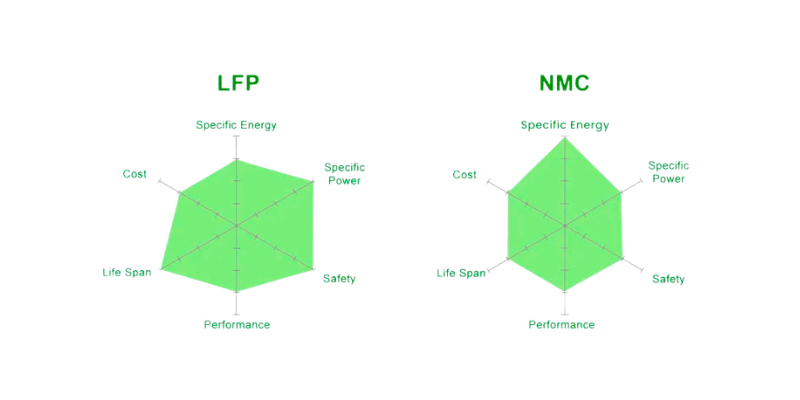
No existe un concepto universal de “una química gana”. La elección correcta depende de cómo su operación estresa la batería:
- frecuencia de ciclo y ventana DoD / SOC
- perfil de temperatura ambiente y del paquete
- servicio de carga rápida (incluido el manejo de carga rápida en frío)
- régimen de inactividad/almacenamiento (riesgo de envejecimiento del calendario)
- densidad de energía requerida vs confiabilidad de energía requerida
Tendencia típica de ingeniería:
- A menudo se prefiere el LFP por su mayor vida útil y robustez en los ciclos de trabajo industriales, cuando la carga rápida se gestiona adecuadamente.
- A menudo se selecciona NMC cuando la densidad de energía es la principal limitación, pero puede requerir un protocolo de carga más estricto y un modelado cuidadoso del ciclo de vida para gestionar el calendario y el envejecimiento del ciclo.
Para apuntar de manera creíble a un resultado a 10 años, se debe modelar:
- ciclo de envejecimiento de su rendimiento
- calendar aging from your storage/operating SOC + temperature dwell
Engineering recommendation: request lifecycle projections tied to your duty cycle; if not available, run characterization and build a degradation forecast for your exact LFP/NMC diseño de la batería.
Question 7: Do batteries recover lost capacity?
In general, degraded capacity is irreversible because it originates from physical/chemical changes such as:
- loss of active lithium inventory (e.g., trapped in interphases)
- interphase thickening
- active material connectivity loss
- lithium inventory loss mechanisms (including plating-related degradation when it occurs)
Una recalibración puede cambiar la forma en que se informa SOC/SOH, y los artefactos de medición pueden parecer temporalmente "recuperación". Pero no restaura la condición físicamente degradada del electrodo.
Conclusión de ingeniería: trate la prevención (gestión térmica, límites de carga correctos, control de ventana de SOC y comportamiento de carga rápida validado) como la estrategia principal.
Impacto económico B2B: TCO y ciclos de reemplazo
Las baterías se convierten en “consumibles” sólo si el intervalo de reemplazo y el riesgo operativo se modelan de manera realista. Un TCO creíble debe incluir:
- recuento de reemplazos impulsado por su estrategia DoD/SOC
- riesgo de tiempo de actividad/tiempo de inactividad a medida que aumenta la impedancia (pérdida de capacidad de energía)
- costos laborales y logísticos peligrosos
- Pérdidas de eficiencia (mayor resistencia → más caída de voltaje y sobrecarga de corriente del sistema)
Ejemplo de lógica de TCO (solo reemplazo, con suposiciones claras)
Supongamos que el costo del paquete de baterías = $1200 y un horizonte de 10 años donde la compra del año 0 se excluye de la comparación de solo reemplazo.
- Si el reemplazo ocurre cada 2 años → reemplazos en los años 2/4/6/8/10 = 5 veces → $1200 × 5 = $6000
- Si la estrategia del Departamento de Defensa/SOC extiende el reemplazo a 5 años → reemplazos en los años 5/10 = 2 veces → $1200 × 2 = $2400
(El TCO real también debería incluir el tiempo de inactividad y los costos operativos impulsados por el rendimiento).
Recomendación de adquisición: exigir proyecciones del ciclo de vida que cubran tanto el envejecimiento del ciclo como el envejecimiento calendario, y confirmar que el diseño térmico de BMS + aborda específicamente los riesgos de carga rápida y operación en frío para LFP/NMC.
Optimice su estrategia energética
Holo Battery admite paquetes industriales LFP y NMC. Diseñamos la lógica BMS y la arquitectura térmica para que coincidan con su ciclo de trabajo y reduzcan los modos de falla de energía primero.
Modelamos curvas de degradación y validamos suposiciones antes de tomar decisiones sobre prototipos.
Siguiente paso: envíe sus requisitos de carga máxima, horas de funcionamiento diarias, comportamiento de inactividad/almacenamiento y temperatura ambiente mínima a sales@holobattery.com. Proporcionaremos una proyección del ciclo de vida y un análisis del TCO en un plazo de 48 horas.