


Custom Battery Packs by Application
Every application fails a battery in its own way: salt and pressure cycling on a boat, interconnect resistance on an AGV, counterweight on a forklift, cold charging on a truck. Choose your application to see the packs we have built for it, how to size one, and the engineering decisions that decide whether it lasts.

Choose your application
Voltage ranges reflect packs we have already built. They are references, not limits: most projects adjust voltage, capacity, enclosure and BMS to the equipment.

eFoils, surfboards, outboards and boat propulsion. Sealed packs designed against teardown data from 300+ failed IP68 packs.
Marine battery packs →
AGVs, AMRs and legged robots. Opportunity charging, low-resistance builds for peak loads and CAN/RS485 telemetry.
AGV and robot batteries →
Lead-acid replacement built to the truck’s compartment, connector, charger and minimum battery weight.
Forklift batteries →
Golf carts, UTVs, tuk-tuks and low-speed vehicles, for fleet upgrades and vehicle makers.
Golf cart and LSV batteries →
Wall-mount, server-rack, mobile and portable storage for solar, backup and telecom, under your brand.
Energy storage batteries →
Survey, heavy-lift, spraying and delivery drones, where energy density and burst current decide flight time.
Drone batteries →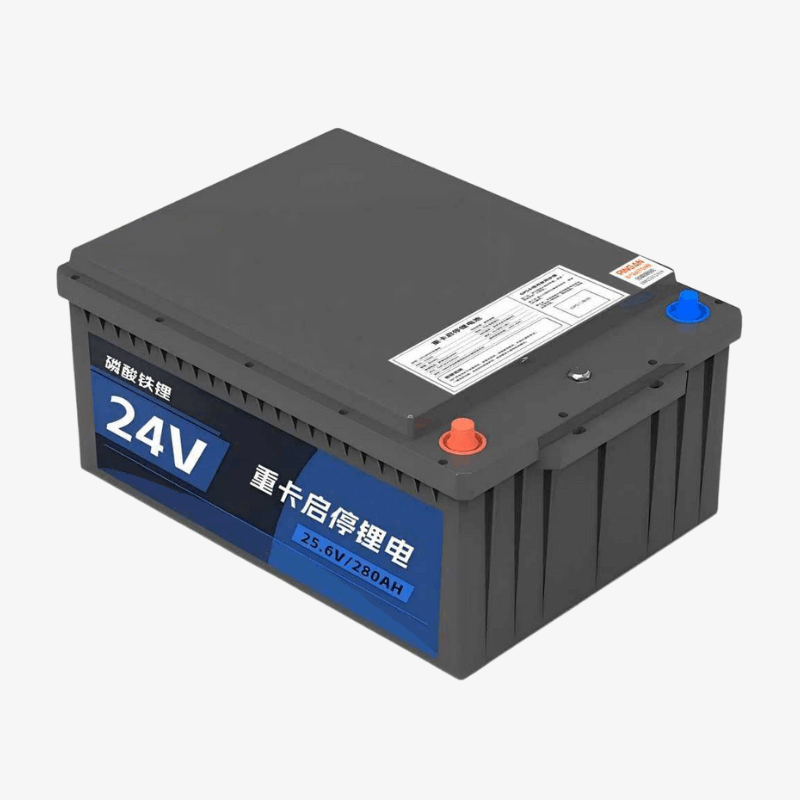
Truck starting, parking air-conditioning and equipment that must start and charge below freezing.
Cold-climate batteries →Medical carts, portable instruments, e-mobility and specialist equipment follow the same process. Send the voltage, current profile, runtime, space envelope and operating temperature, and an engineer will tell you whether an existing platform fits.
Send your requirements →The seven phases from requirements to serial production, the decisions that set cost and lead time, and what to prepare for the first call.
Read the development process →What decides the design in each application
The same cell can succeed in one application and fail early in another. This is the constraint we start from for each.
| Application | Usual chemistry | The constraint that decides the design | Most common mistake we see |
|---|---|---|---|
| Marine | LiFePO4 | Long-term sealing under pressure and thermal cycling | Treating an IP68 test as proof of field life |
| AGVs & robots | LiFePO4, NMC for humanoids | Peak current without voltage sag | Sizing for average power; resistive interconnects |
| Forklifts | LiFePO4 | Fit, counterweight and charger of an existing truck | Copying the lead-acid Ah rating; ignoring minimum battery weight |
| Golf carts & LSVs | LiFePO4 | Range on real terrain, controller and regen limits | Keeping a lead-acid charger profile |
| Energy storage | LiFePO4 | Inverter communication and parallel scaling | Assuming a “48V” label means a compatible voltage window |
| Drones | Lithium-ion (NMC) | Energy per kilogram at the required C-rate | Adding capacity until weight cancels the gain |
| Cold climate | Sodium-ion or heated LiFePO4 | Charging safely below freezing | Charging LiFePO4 below freezing without a heater interlock |
More about how we work
Lead time and order quantity
From a locked specification: samples in 12–15 working days when cells are in stock, 20–25 when cells must be sourced; production in 30–35 working days. From the first design conversation: about 4 weeks for a finalised design with no new tooling, 8–12 weeks for a typical custom project, 14–18 weeks when certification is in scope. How each phase works: custom battery pack development process and our manufacturing capabilities.
Start with your application
An engineer replies with questions or a proposed configuration. The more of this list you can share, the faster we can quote:
- What the pack powers and how it is used
- Nominal voltage and controller or inverter model
- Average and peak current, or power
- Runtime, range or energy per shift
- Space envelope and weight limit
- Operating and charging temperature
- Communication protocol
- Annual volume and target standards