


Custom Lithium Batteries for Golf Carts and Low-Speed Vehicles
48V to 144V LiFePO4 traction packs for golf carts, utility carts, UTVs, tuk-tuks and low-speed vehicles. For fleet operators replacing lead-acid, and for vehicle makers who need a pack designed around their controller, chassis and charger.
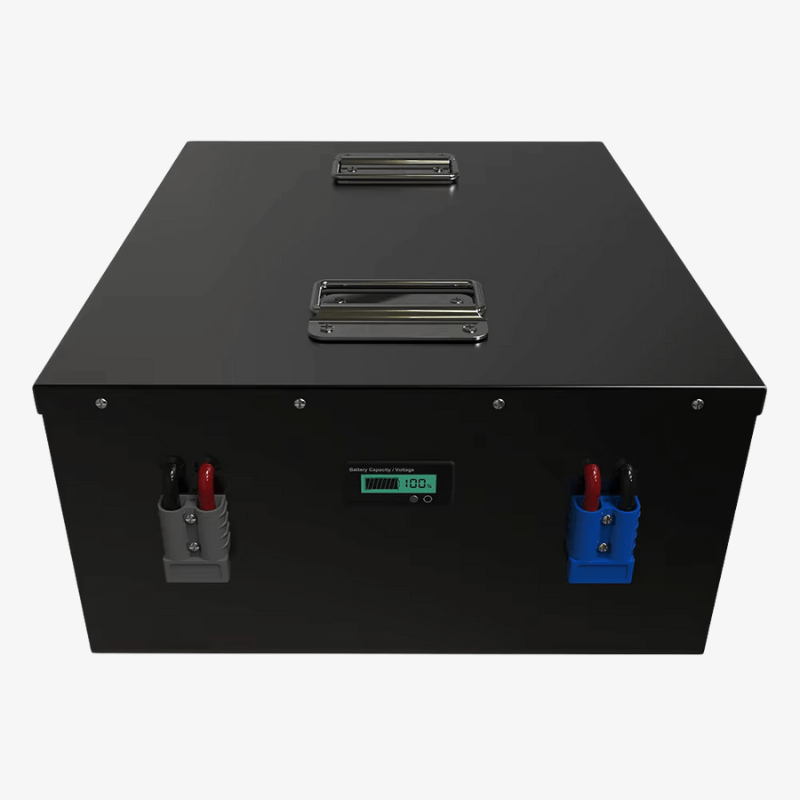


Vehicles we build packs for
| Vehicle | Voltaje del sistema | ¿Qué impulsa el diseño? | Reference packs |
|---|---|---|---|
| Golf carts (fleet and private) | 48 V | Rounds per charge, drop-in fit to the existing tray, charger compatibility | 48V 100Ah · 48V 105Ah 48V 150Ah · 48V 210Ah |
| Tuk-tuks, e-tricycles and UTVs | 72V | Battery swapping, payload, hill climbing | 72V 210Ah (swappable) |
| Long-range carts and shuttles | 72V | All-day range for resorts and campuses | 72V 608Ah |
| High-voltage low-speed vehicles | 96V – 144V | Higher motor power at lower current, vehicle-maker integration | 96V 210Ah 144V 520Ah |
Sizing a pack for range
Range depends on the vehicle, not the battery label. The most reliable number is watt-hours per mile (or km) measured on your own route, with your typical load and hills. A 48V golf motor typically draws 50–70A at around 15 mph on the flat, more on hills and during acceleration, so a hilly course can use far more energy per mile than a flat one.
- Measured consumption on the course, averaged over a round:
110 Wh/mile - Target per charge: two 18-hole rounds plus driving to and from the clubhouse ≈
30 miles→3.3 kWh - Usable at 90% and 20% ageing margin → rated
3.3 ÷ (0.9 × 0.8) ≈ 4.6 kWh - At 16S LiFePO4 (51.2V nominal):
4,600 ÷ 51.2 ≈ 90 Ah
Matching the pack to the controller and charger
- Controller current
- The BMS continuous and peak current limits must exceed what the motor controller draws during acceleration and hill climbs, or the BMS will cut power on the steepest part of the course.
- Voltage window
- LiFePO4 holds a higher voltage than lead-acid for most of the discharge, so carts often feel faster. Confirm the controller’s maximum input voltage against the pack’s full-charge voltage.
- Regenerative braking
- Carts with regen push current back into the pack on descents. The BMS charge limit and the cells must accept it, especially when the pack is already full at the top of a hill.
- Cargador
- A lithium charger at the right voltage, or a reprogrammed existing charger. Lead-acid profiles with equalisation or float stages are not suitable.
- State of charge
- A meter or display driven by the BMS replaces voltage-based gauges, which read wrongly on lithium’s flat voltage curve.
- Estándares
- Batteries for light electric vehicles are commonly assessed against UL 2271, with UN38.3 for transport. Which reports cover your exact design is confirmed at quotation.
Upgrading a fleet from lead-acid
What changes
- One pack replaces a series string of 6V, 8V or 12V lead-acid batteries
- No watering, no terminal corrosion, no equalising
- Lower weight, so less wear on the cart and the turf
- Partial charging between rounds does no harm
What to check first
- Tray dimensions and hold-down points
- Controller current and voltage limits
- Charger model and whether it can run a lithium profile
- Whether the cart uses regen braking
- Fleet size, so we can standardise one pack across models
Step-by-step guide: How to Upgrade Your Golf Cart to Lithium Batteries.
Lead time and order quantity
From a locked specification: samples in 12–15 working days when cells are in stock, 20–25 when cells must be sourced; production in 30–35 working days. From the first design conversation: about 4 weeks for a finalised design with no new tooling, 8–12 weeks for a typical custom project, 14–18 weeks when certification is in scope. How each phase works: custom battery pack development process y our manufacturing capabilities.
Golf cart and LSV battery questions
How far will a 48V lithium golf cart battery go?
Can I keep my existing golf cart charger?
Will the cart go faster on lithium?
Do you make packs for vehicle manufacturers?
Can 72V packs be swapped quickly?
Further reading
Send your vehicle details
An engineer replies with questions or a proposed configuration. The more of this list you can share, the faster we can quote:
- Vehicle type, make and model
- System voltage and controller model
- Tray dimensions and weight limit
- Range or rounds needed per charge
- Terrain and typical load
- Charger model, or need a new charger
- Regen braking: yes or no
- Fleet size or annual production volume