


Batteries for Cold Climates, Trucks and Heavy Equipment
Sodium-ion and heated LiFePO4 for truck starting, parking air-conditioning and equipment that must start, work and charge below freezing. Cold breaks lithium batteries in two ways: voltage sags under load, and charging below freezing plates lithium and destroys capacity. We design around both.

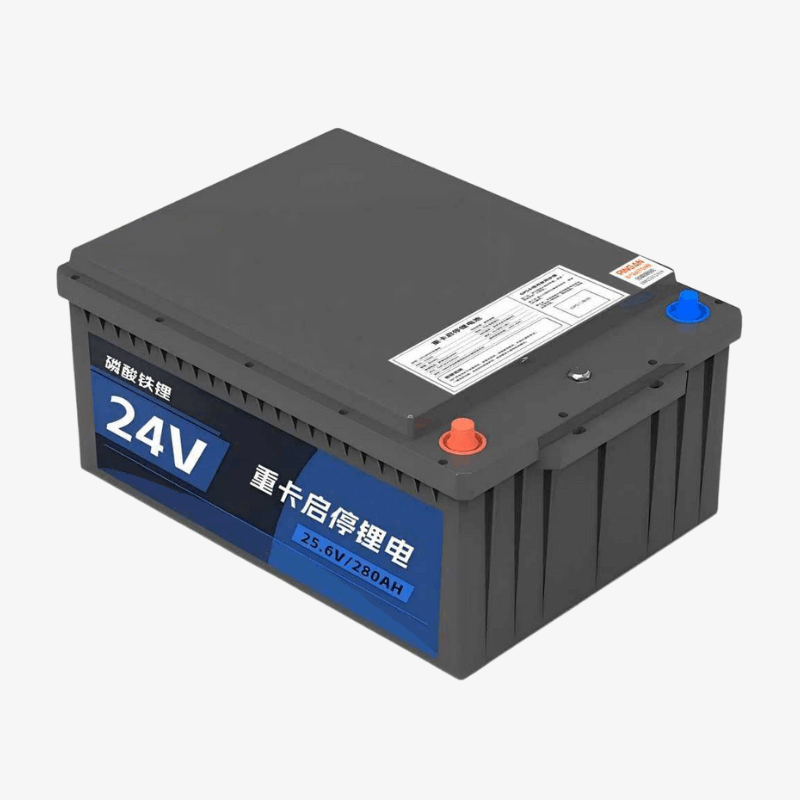


Cold-weather applications we build for
| Toepassing | Scheikunde | Wat drijft het ontwerp | Reference packs |
|---|---|---|---|
| Car and van start-stop (H5–H9 sizes) | Natrium-ion | Cold cranking amps at low temperature, AGM-size replacement | 12V 30Ah H5, 750 CCA 12V 40Ah H8, 850 CCA 12V 50Ah H9, 1000 CCA |
| Motorcycles and powersports | Natrium-ion | Small case, starting from −40°C to 80°C | 12V 10Ah, 250 CCA |
| Heavy truck starting and house power | Heated LiFePO4 | Large energy plus cranking, self-heating down to −30°C | 24V 280Ah, 7.16kWh |
| Truck parking air-conditioning | LiFePO4 | Running the cab AC overnight without idling the engine | 24V 300Ah |
| Electric construction equipment | Heated, insulated LiFePO4 | Burst current at sub-zero temperatures, safe charging outdoors | Custom design (see case study) |
| Off-grid sensors, trackers, telecom | Natrium-ion | Charging from solar in winter without heaters, long storage | Custom design |
Sodium-ion or heated LiFePO4?
LiFePO4 can discharge in deep cold but must not be charged below freezing without heating: below about 0°C, and severely below −20°C, lithium plates onto the anode instead of entering it, which permanently loses capacity and can create internal shorts. Heating fixes that, at the cost of energy, heaters, sensors and BMS logic that can themselves fail.
Sodium-ion keeps far more of its capacity in the cold and charges safely at −20°C without heaters in our validation. It stores less energy per kilogram, so it suits starting and intermittently charged equipment better than long-range traction. More: Sodium-Ion vs Heated LFP: Why We Removed the Heating Pads.
| Premium low-temperature LFP | Natrium-ion | |
|---|---|---|
| Discharge capacity at −20°C | 75% (bij 1C) | 88,9% (bij 0,5°C) |
| Charging below freezing | Heating required | Validated at −20°C without heating |
| Energy lost to heating | Often 10–15% of winter solar yield | Geen |
| Storage at 0V | Damages the copper current collector | Recovered to full capacity after 24 h shorted at 0V in our cell test |
| Energiedichtheid | Hoger | Lager |
| Best fit | Maximum runtime, heated or indoor equipment | Starting, outdoor and solar-charged equipment, long storage |
Figures from our laboratory tests on specific cells; your cells and conditions will differ. Background: Natriumbatterij vs. lithiumbatterij, lithiumbatterijen bij koud weer.
Sizing a parking air-conditioning battery
A parking AC battery has to run the cab overnight without idling the engine, then recharge from the alternator or shore power during the next day’s driving. Size it from the AC unit’s average draw over the night, not its maximum rating: the compressor cycles, and the average is usually well below the nameplate. Keep engine starting on a separate battery so the AC can never leave the truck unable to start.
- Average AC draw over the night, logged or from the AC maker:
800 W - Rest period:
8 h→ energy needed800 × 8 = 6.4 kWh - Pack: 24V 300Ah (8S LiFePO4, 25.6V nominal) →
25.6 × 300 ≈ 7.68 kWhrated,≈ 6.9 kWhusable at 90% - Recharge during driving at 100A from the alternator:
6.4 kWh ÷ (25.6 V × 100 A) ≈ 2.5 h
Case study: electric excavators at −25°C
A fleet of 50 electric excavators in the Oslo region ran standard 48V 400Ah LFP packs with no preheating and no low-temperature charge interlock. At −25°C, hydraulic pumps drew bursts up to 300A, the pack voltage sagged below the machine’s 36V undervoltage limit, and operators restarted machines four to five times a shift. Charging cold cells cost the packs about 30% of their capacity in one winter.
We redesigned the pack as a thermal-electrical system: polyimide heater films between modules (−25°C to 15°C in about 45 minutes on grid power), 3 mm aerogel insulation that held the core above 15°C through two idle hours at −25°C, and a BMS that routes incoming power to the heaters first and allows charging only above 15°C.
| 300A pulse at −25°C ambient | Original pack | Redesigned pack |
|---|---|---|
| Core temperature at test start | −25°C | 18°C (preheated) |
| Voltage sag during the pulse | 14.2V | 3.1V |
| Charging below freezing | Allowed | Blocked until 15°C |
| Capaciteitsverlies na één winterseizoen | 32% | < 2% |
The fleet then ran two winters with no battery replacements attributed to cold charging and no reported cold-weather shutdowns; the customer estimated the extra engineering cost was recovered in about four months. Full write-up: Electric Excavator Battery Case Study.
Designing a heated LiFePO4 pack
- Heater power and placement
- Heater films between modules rather than on the outside, so every cell warms evenly. Heat flux and warm-up time are set against the coldest ambient and the time available before work starts.
- Isolatie
- Insulation keeps the heat once the pack is warm, which matters more than heater power for equipment that idles outdoors.
- Charge interlock
- The BMS powers the heaters from the charger first and enables charging only above a validated cell temperature. Without this interlock a heated pack still plates lithium.
- Peak current in the cold
- Cell resistance rises in the cold, so the pack is sized to hold the machine’s undervoltage limit at its burst current and lowest operating temperature, not at 25°C.
- Cranking
- For starting batteries, cold cranking amps (CCA) are specified at low temperature. Our 12V lithium starters range up to 1800 CCA; see what CCA means.
Lead time and order quantity
From a locked specification: samples in 12–15 working days when cells are in stock, 20–25 when cells must be sourced; production in 30–35 working days. From the first design conversation: about 4 weeks for a finalised design with no new tooling, 8–12 weeks for a typical custom project, 14–18 weeks when certification is in scope. How each phase works: custom battery pack development process En our manufacturing capabilities.
Cold-weather battery questions
Can LiFePO4 batteries be charged below freezing?
Is sodium-ion a drop-in replacement for an AGM starter battery?
How long does a heated battery take to warm up?
Will a parking air-conditioning battery last the night?
What about very cold storage and shipping?
Send your cold-weather requirements
An engineer replies with questions or a proposed configuration. The more of this list you can share, the faster we can quote:
- Equipment or vehicle type
- Lowest ambient temperature, and where the battery sits
- System voltage and controller or starter requirements
- Burst current and duration, or CCA required
- Energy needed per shift or per night
- How and when the battery is charged
- Size and weight limits
- Annual volume