

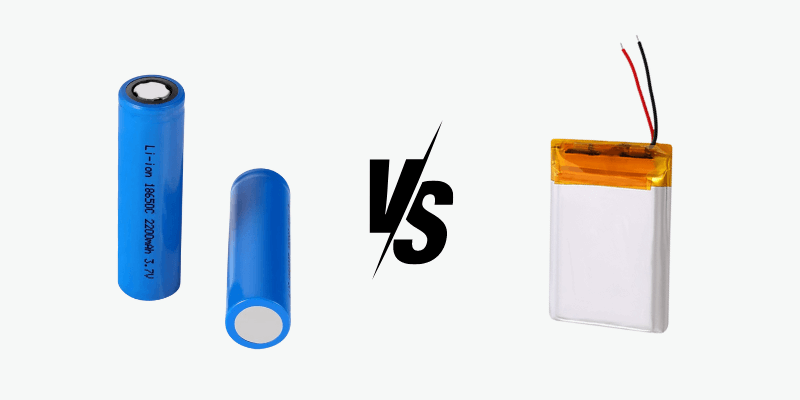
Lithium-ion and lithium-polymer batteries use the same basic chemistry. The real difference is packaging.
A Li-ion cell holds its liquid electrolyte inside a rigid metal can, usually an 18650 or 21700 cylinder. A LiPo cell uses a gel polymer electrolyte sealed in a soft aluminum pouch.
That single difference drives everything else: energy density, safety behavior, shape flexibility, and cost. The sections below compare them in detail.
What Is A Lithium-ion Battery?
A standard lithium-ion battery consists of a positive cathode (typically NMC, LCO, or LFP), a carbon graphite anode, a porous polyolefin separator, and a volatile liquid organic solvent holding dissolved lithium salts.
These internal components are rolled into cylindrical jelly-rolls or stacked into flat jelly-rolls and sealed inside a nickel-plated steel or rigid aluminum can.
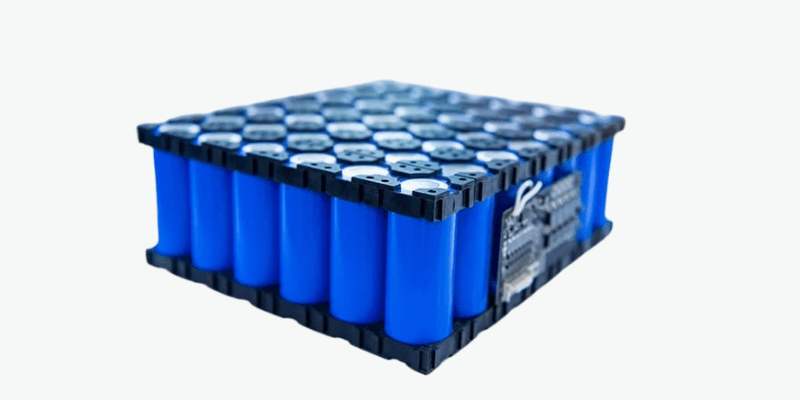
Cylindrical formats such as 18650, 21700, and 26650 are mass-produced on highly automated assembly lines, serving as the foundational building blocks for electric vehicles, power tools, and high-capacity custom battery pack assemblies.
Advantages Of Lithium-ion Batteries
Rigid lithium-ion batteries provide key engineering benefits:
- Superior Volumetric Energy Density: Tightly wound jelly-rolls inside rigid metallic cans achieve volumetric energy densities between 500 and 700 Wh/L, maximizing capacity within compact enclosures.
- High Mechanical Impact Resistance: Hard steel casings resist structural deformation, high vibration, and physical impacts in demanding industrial equipment.
- Cost-Effective Mass Production: Standardized cell dimensions allow automated robotic welding and assembly, significantly lowering per-kilowatt-hour production costs.
- Extended Operational Cycle Life: High-grade cylindrical cells consistently deliver 1000 to 2000 full cycles before dropping to eighty percent residual capacity.
Disadvantages Of Lithium-ion Batteries
- Fixed Geometric Form Factors: Standard dimensions (18650, 21700) cannot be resized to fit custom curved or ultra-slim consumer device cavities.
- Heavier Packaging Weight: Steel and aluminum protective outer cans add passive dead weight compared to aluminum polymer foils.
- Internal Pressure Hazards: In extreme thermal runaway, rigid metal cans can rupture violently if safety release vents become obstructed.
What Is A Lithium-polymer Battery?
Lithium-polymer (LiPo) batteries replace traditional liquid electrolytes with a semi-solid conductive gel polymer matrix (such as polyethylene oxide or PVDF) immobilized between cathode and anode foils. The complete electrochemical stack is vacuum-sealed inside a multi-layer aluminum laminated foil pouch.
This pouch construction eliminates the need for rigid cylindrical cans, allowing manufacturers to fabricate cells as thin as 0.5 millimeters in virtually any rectangular contour.

Advantages Of Lithium-polymer Batteries
- Geometric Flexibility: Pouch cells can be manufactured in custom lengths, widths, and ultra-slim profiles to fit non-standard device chassis.
- Lightweight Construction: Thin aluminum composite laminate packaging eliminates 20 percent of passive can weight, boosting gravimetric specific energy.
- Benign Failure Mode: In severe overcharge conditions, the flexible aluminum foil pouch splits open and vents gases rather than building explosive internal hydrostatic pressure.
Disadvantages Of Lithium-polymer Batteries
- Higher Custom Tooling Cost: Non-standard pouch dimensions require custom sealing dies and electrode cutting tools, cost-prohibitive for small production runs.
- Vulnerability to Puncture: The soft foil exterior offers minimal defense against sharp external punctures, mandating external plastic frame reinforcement.
- Pouch Swelling Over Time: Aging or overcharging decomposes gel electrolytes into gaseous byproducts, causing visible swelling that can crack device enclosures.
Lithium-ion vs. Lithium Polymer Batteries: Which is Safer?
Both chemistries operate safely when paired with a compatible BMS that strictly monitors overvoltage, overcurrent, and temperature thresholds. However, their structural response to abuse conditions differs fundamentally.
Cylindrical lithium-ion cells incorporate Current Interrupt Devices (CID) and mechanical pressure relief vents to prevent explosions, but retain rigid steel containment under high stress.
In contrast, lithium-polymer pouch cells exhibit a milder venting profile, swelling into a soft pillow before the perimeter heat seal separates to release gas safely.
Difference Between Lithium-ion And Lithium Polymer Battery
The following engineering comparison matrix summarizes the key technical trade-offs between cylindrical lithium-ion cells and lithium-polymer pouch cells:
| Engineering Parameter | Cylindrical Lithium-Ion | Lithium-Polymer (Pouch) | Design Implications |
|---|---|---|---|
| Electrolyte Matrix | Liquid organic solvent | Immobilized gel polymer | Gel electrolytes reduce leakage risks |
| Mechanical Housing | Nickel-plated steel / aluminum can | Multi-layer aluminum laminate foil | Pouch cells require rigid external chassis |
| Form Factor Flexibility | Fixed industry standards (18650, 21700) | Fully customizable thickness and contour | Specify LiPo for curved or ultra-slim cavities |
| Volumetric Energy Density | High (500 to 700 Wh/L) | Moderate to High (400 to 600 Wh/L) | Cylindrical packs pack maximum energy per liter |
| Typical Cycle Life | 1,000 to 2,000 cycles | 500 to 1,000 cycles | Cylindrical cells offer superior long-term endurance |
| Failure Characteristic | Vents through scored top cap | Pouch expands and separates at seam | LiPo eliminates projectile risk during venting |
| Custom Tooling Expense | Zero (Standard off-the-shelf cells) | High tooling costs for custom pouch dies | Pouch customization requires volume justification |
Engineering Selection and Safety Considerations
Why do lithium polymer batteries swell, and how is it prevented?
Swelling in pouch cells occurs when internal trace moisture, high ambient temperatures, or overcharging trigger electrochemical decomposition of the electrolyte, generating carbon dioxide, carbon monoxide, and hydrocarbon gases. Incorporating an accurate battery management system with tight 4.20V cutoffs and reserving an eight to ten percent expansion void inside the battery compartment prevents housing damage.
How do cylindrical cells compare against pouch cells under mechanical shock?
Cylindrical cells feature rigid steel walls capable of withstanding rough handling, drop impacts, and severe vibration without internal short circuits. Pouch cells require robust structural frames, silicone cushioning, and isolated battery bays to protect the delicate laminated foil exterior from sharp internal burrs or frame deflection.
When is custom lithium polymer tooling cost-justified?
Lithium polymer custom pouch dimensions require dedicated tooling charges for electrode slitting, pouch forming dies, and heat-sealing jigs. This capital investment proves cost-effective when manufacturing sleek consumer electronics, wearable biomedical monitors, or aerodynamic aerospace housings where non-standard cavities prohibit cylindrical cells.
Conclusion
When selecting between lithium-ion and lithium-polymer batteries, hardware designers must weigh mechanical durability, enclosure dimensions, and production volume. For high-capacity systems requiring rugged physical containment and standardized procurement, cylindrical lithium-ion cells remain the premier engineering choice. For slim, weight-critical applications where internal space demands custom geometric contours, lithium-polymer pouch cells provide the ultimate packaging flexibility.
Related Articles: