

Lithium iron phosphate batteries, commonly called LiFePO4 or LFP batteries, are rechargeable lithium-ion batteries known for strong thermal stability, long service life, and stable voltage. They power energy storage systems, electric vehicles, marine equipment and mobility devices.
LiFePO4 isn’t automatically the best chemistry for every application, though. This guide covers how LiFePO4 batteries work, their real advantages and limitations, and what to specify when ordering a custom battery pack.
- LiFePO4 generally offers a longer cycle life and stronger thermal stability than NMC lithium-ion chemistry, usually at a lower energy density.
- LiFePO4 cells run at a 3.2V nominal voltage, with 12.8V, 24V, and 48V the most common pack configurations.
- The BMS, not the cell chemistry alone, determines much of a pack’s real-world safety and performance.
What Is a LiFePO4 Battery?
A LiFePO4 battery is a lithium-ion battery that uses lithium iron phosphate as its cathode material, paired with a graphite anode, electrolyte, separator, and a battery management system (BMS).
During charging, lithium ions move from the cathode to the anode. During discharge, they move back while electrons flow through the external circuit to power the equipment. The BMS monitors voltage, current, temperature, and state of charge, and protects the pack from overcharging, over-discharging, and abnormal temperatures.
For a closer look at what the BMS does, see our guide to battery management systems.
How Do LiFePO4 Batteries Work?
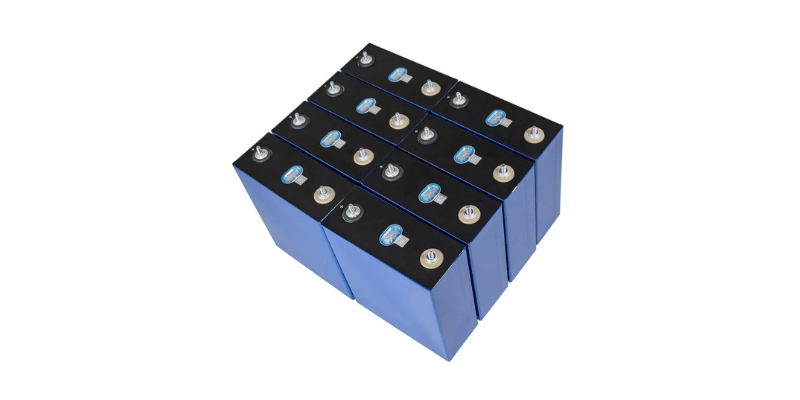
Cells are wired in series to raise voltage or in parallel to raise capacity. A combination of both delivers the exact voltage and energy an application needs.
The final battery pack design depends on the equipment’s load, run time, installation space, and charging system.
Main Benefits of LiFePO4 Batteries
1. Long Cycle Life
LiFePO4 cells commonly reach 2,000 to 5,000 cycles at 80% depth of discharge before falling to 80% of original capacity, depending on charge rate, temperature, and cell quality (Battery University, cycle life comparison data). Actual results still depend on how the pack is specified and used, so cycle-life claims should always be tied to defined test conditions.
2. Strong Thermal Stability
LiFePO4 is generally more thermally stable than other common lithium-ion chemistries, which suits solar storage, marine equipment, RVs, and industrial use. Thermal stability doesn’t eliminate all risk. A complete pack still needs a correctly configured BMS, reliable wiring, and mechanical protection.
3. Good Safety Characteristics
A LiFePO4 pack can layer in overcharge, over-discharge, overcurrent, short-circuit, and over-temperature protection alongside cell balancing. Overall safety depends on the complete system, not the chemistry alone.
4. Stable Voltage During Discharge
LiFePO4 batteries hold a relatively flat voltage through most of the discharge cycle, which helps equipment like communication gear, medical devices, and robotics run consistently without a rapid voltage drop near the end of a cycle.
5. Lower Environmental and Material Concerns
LiFePO4 doesn’t use cobalt as its main cathode material, which appeals to buyers looking to reduce cobalt-based supply chain exposure. Overall environmental performance still depends on manufacturing, transport, and end-of-life recycling.
6. Suitable for Custom Battery Pack Design
LiFePO4 cells come in cylindrical, prismatic, and pouch formats, which makes them adaptable to custom voltage, capacity, size, and connector requirements. See our custom lithium battery pack design guide for the full process.
Limitations of LiFePO4 Batteries
Lower Energy Density Than Some Lithium-Ion Chemistries
LiFePO4 cells typically deliver around 90 to 120 Wh/kg, compared to roughly 150 to 220 Wh/kg for NMC cells (Battery University, energy density comparison). That gap means LiFePO4 packs need more space or weight to store the same energy, which matters when size or weight is the top priority.
Higher Initial Cost Than Lead-Acid Batteries
LiFePO4 batteries typically cost 2 to 3 times more upfront than an equivalent lead-acid battery, though the gap has narrowed as cell prices have dropped. A fair comparison weighs total cost of ownership, including service life and maintenance, rather than sticker price alone.
Charging Performance at Low Temperatures
Charging lithium cells below freezing without protection can permanently damage them. Packs used in cold climates need temperature sensors, charge cutoff logic, or heating elements built into the BMS.
The BMS Must Be Correctly Matched
A pack shouldn’t be designed around cell selection alone. The BMS must match cell count, voltage, current, temperature sensing, and communication needs, or the pack can suffer nuisance shutdowns and unsafe operating conditions.
LiFePO4 vs. NMC Batteries
LiFePO4 and NMC are both lithium-ion chemistries suited to different jobs. LiFePO4 leads on safety, thermal stability, and cycle life; NMC leads on energy density and compact size.
Neither chemistry is universally better. The right choice depends on the equipment and its operating environment.
| Factor | LiFePO4 | NMC |
|---|---|---|
| Main strength | Safety, stability, and cycle life | Higher energy density |
| Typical use | Energy storage, marine, industrial, RV | Portable equipment, EVs, compact devices |
| Space efficiency | Usually requires more space | Usually more compact |
| Thermal stability | Generally strong | Requires careful pack protection |
| Low-temperature charging | Requires protection | Requires protection |
| Best selection factor | Reliability and service life | Weight and space limitations |

When Should You Choose a LiFePO4 Battery?
LiFePO4 fits well when an application needs long service life, stable voltage, high daily cycling, or strong thermal stability, such as golf cart lithium conversions or trolling motor batteries. It’s a weaker fit when the top priority is the smallest possible size or the highest possible energy density.
Before choosing a chemistry, define the application’s voltage, energy per cycle, continuous and peak current, available space, temperature range, cycling frequency, communication protocol, and certification requirements. See our overview of lithium battery types for how LiFePO4 compares to other options beyond NMC.
What Should OEM Buyers Specify for a Custom LiFePO4 Battery Pack?
When requesting a custom battery pack, group your specification into three categories to help the manufacturer respond faster.
Electrical: nominal voltage, amp-hour capacity, watt-hour energy, continuous and peak discharge current, charging voltage and current.
Physical: dimensions and weight limit, connector type, installation orientation, waterproofing, operating temperature range.
Program: expected cycle life, communication protocol, BMS functions, required certifications (including ABYC E-13 standards for marine applications), order quantity, and production schedule.
A complete specification helps the manufacturer select the right cells, electrical architecture, BMS, and enclosure. See how to choose the best lithium battery manufacturer for the full selection process.

Are LiFePO4 Batteries Safe?
LiFePO4 is a stable lithium-ion chemistry, but safety depends on the complete system: quality cells from a traceable source, a correctly configured BMS, proper cell matching, secure connections, insulation, and mechanical protection. Certification and transportation requirements vary by product type and destination market.
How Long Do LiFePO4 Batteries Last?
Service life depends on depth of discharge, operating temperature, charging profile, cell quality, and BMS configuration. Staying within the recommended operating range and avoiding unnecessary deep discharge is the most reliable way to extend it.
Frequently Asked Questions
What voltage do LiFePO4 batteries come in?
A single cell runs at about 3.2V nominal. Cells combine in series to build common pack voltages: 12.8V, 24V, 25.6V, 36V, and 48V.
Can LiFePO4 batteries be used in cold weather?
Yes for discharge, but charging below freezing without protection can damage the cells. A BMS with temperature sensing or a heated enclosure solves this.
What is the difference between LiFePO4 and NMC batteries?
LiFePO4 favors safety, thermal stability, and cycle life. NMC favors higher energy density in a smaller, lighter package.
Can LiFePO4 batteries catch fire?
LiFePO4 is more thermally stable than other lithium-ion chemistries, but a damaged cell, mismatched BMS, or poor pack design can still create unsafe conditions.
Why is LiFePO4 more expensive than lead-acid?
Cell materials and BMS electronics cost more upfront. A longer cycle life and lower maintenance can offset that gap over the battery’s service life.
Conclusion
LiFePO4 batteries suit applications that prioritize long service life, thermal stability, and reliable daily cycling, but they aren’t automatically the right chemistry everywhere. The correct choice depends on energy density, current, space, temperature range, and total cost of ownership.
If you’re developing a custom LiFePO4 battery pack, share your voltage, capacity, current, dimensions, and operating environment. Our engineering team can recommend the cell configuration, BMS, enclosure, and testing plan from there.